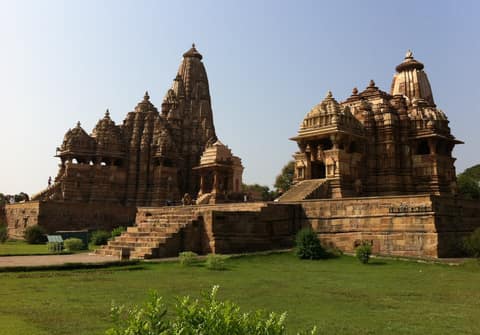
Carved sandstone spires and figure sculpture on a temple at Khajuraho.
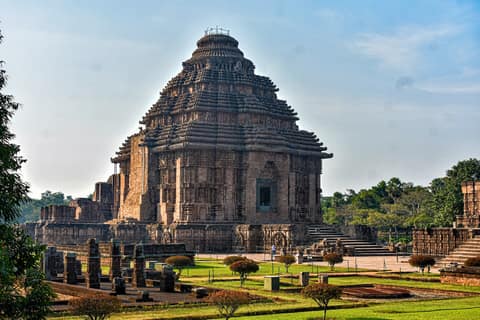
A carved stone chariot wheel on the plinth of the Sun Temple at Konark.
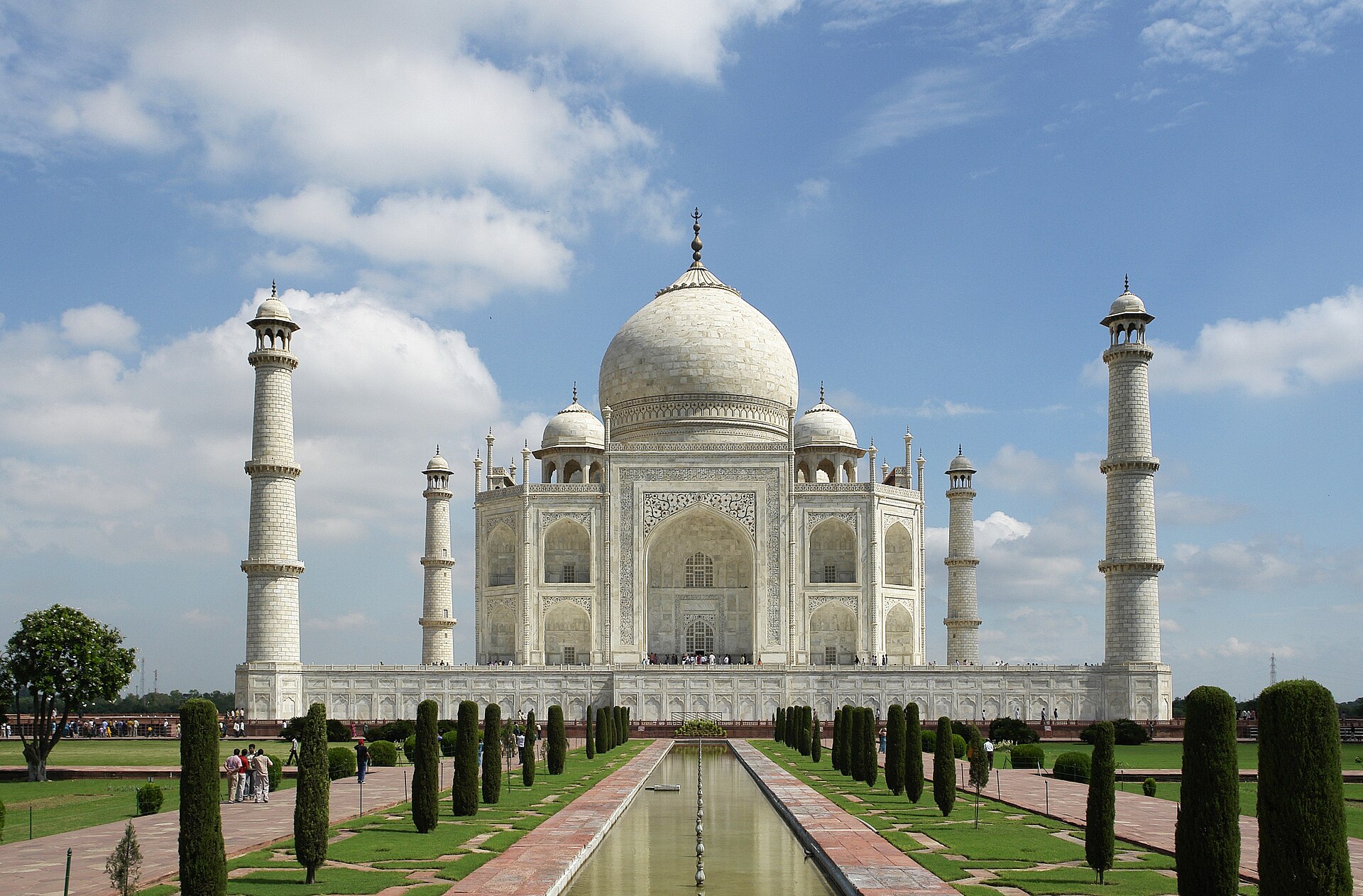
The Taj Mahal in white marble, reflected in its watercourse at dawn.
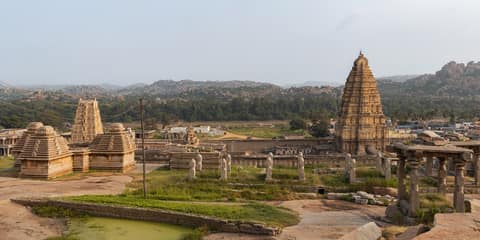
Temple ruins among granite boulders in the landscape at Hampi.
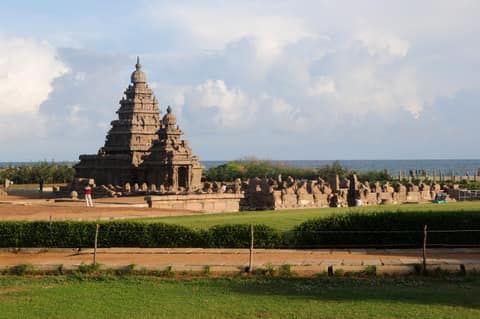
Rock-cut monuments on the shore at Mahabalipuram.

Context

The country this heritage belongs to

A subcontinent the size of Europe, with more languages in daily use than the European Union has member states. What follows is the frame the rest of this site sits inside — the land, the people, the living practices, and the symbols a republic chose for itself in 1947.

The land

India runs from permanent Himalayan snow to equatorial coast within a single country. That range is why its heritage is not one tradition: what people built depended on what stone was under them and how much rain fell on it.

3.29m
Square kilometres

Seventh largest country by area

7,500 km
Coastline

Arabian Sea, Indian Ocean and Bay of Bengal

28 + 8
States and union territories

Each with its own languages and building traditions

6
Land neighbours

Pakistan, China, Nepal, Bhutan, Bangladesh, Myanmar

Six regions, six ways of building

A rough division, but a useful one: each of these produced a distinct building tradition because it had different material and different weather to work against.

The Himalaya and the north

Mountain and foothill country running the length of the northern border, holding the headwaters of the river systems the plains depend on.

What it left: Timber-and-stone temple building, Buddhist monastic architecture in Ladakh and Sikkim, and the hill railways cut into the slopes under British administration.

The Gangetic plain

Alluvial flatland along the Ganges and Yamuna, the most densely populated part of the country and the seat of most of its imperial capitals.

What it left: Mauryan pillars, Buddhist stupas at Sanchi and Sarnath, the Delhi Sultanate and Mughal capitals, and the brick monasteries of Nalanda.

The desert and the west

Arid Rajasthan and Gujarat, where water storage determined where people could live and how much they could build.

What it left: Hill forts on defensible scarps, stepwells cut seven storeys into the ground, and the Harappan city of Dholavira with its sixteen reservoirs.

The Deccan plateau

Volcanic basalt uplands in the centre of the peninsula — rock hard enough to cut into and stable enough to hold a carved ceiling.

What it left: The rock-cut halls of Ajanta, Ellora and Elephanta, the Chalukyan temples at Pattadakal, and Vijayanagara's capital at Hampi.

The south

Granite country below the Deccan, with a temple tradition that continued unbroken where the north was repeatedly interrupted.

What it left: Pallava shore temples at Mahabalipuram, the Chola temples at Thanjavur, Hoysala soapstone carving, and living temple cities such as Madurai.

The east and north-east

Delta, hill and forest country from Odisha through Bengal to the Brahmaputra valley, with the highest rainfall in the country.

What it left: The Sun Temple at Konark, the mangrove Sundarbans, Ahom burial mounds at Charaideo, and the Vaishnava monasteries that keep Sattriya alive.
The people and the languages

India has no single national language. The Constitution schedules twenty-two, the Union conducts business in two, and the 2011 Census recorded well over a thousand mother tongues. Every inscription, every sung text and every dance libretto on this site is in one of them.

22
Scheduled languages

Listed in the Eighth Schedule of the Constitution

121
Languages with 10,000+ speakers

2011 Census; 1,369 rationalised mother tongues recorded

11
Classical languages

Tamil first, in 2004; five more added in 2024

2
Official languages of the Union

Hindi in Devanagari script, with English as associate

Heritage that is practised, not built

15 UNESCO elements

UNESCO keeps a second list for practices rather than places. It is arguably the more fragile register: a temple can stand empty for a century and be restored, but a form of chanting that goes one generation untaught is gone.

  1. 2008

    Tradition of Vedic chanting

    Recitation techniques engineered so that an error in a memorised text is audible.

  2. 2008

    Ramlila, the traditional performance of the Ramayana

    Community-staged cycles performed over days across northern India.

  3. 2008

    Kutiyattam, Sanskrit theatre

    Kerala's Sanskrit drama, among the oldest continuously performed theatre forms.

  4. 2009

    Ramman, religious festival and ritual theatre

    A masked spring festival of the Garhwal Himalayas.

  5. 2010

    Mudiyettu, ritual theatre and dance drama

    Kerala temple ritual enacting the goddess Kali's victory over Darika.

  6. 2010

    Kalbelia folk songs and dances

    Songs and dance of the Kalbelia community of Rajasthan.

  7. 2010

    Chhau dance

    Masked martial dance traditions of Odisha, Jharkhand and West Bengal.

  8. 2012

    Buddhist chanting of Ladakh

    Recitation of sacred texts in the monasteries of the trans-Himalaya.

  9. 2013

    Sankirtana: ritual singing, drumming and dancing

    Vaishnava performance of Manipur, related to the Manipuri dance tradition.

  10. 2014

    Brass and copper craft of the Thatheras

    Utensil-making by hand at Jandiala Guru in Punjab.

  11. 2016

    Yoga

    Philosophy and practice with roots in the same textual tradition as the Vedas.

  12. 2016

    Nawrouz

    New year observance shared with a dozen other countries.

  13. 2017

    Kumbh Mela

    The largest peaceful gathering of people anywhere on earth.

  14. 2021

    Durga Puja in Kolkata

    A city-scale festival of commissioned temporary architecture and sculpture.

  15. 2023

    Garba of Gujarat

    Circular devotional dance performed around a central lamp.

What the republic chose for itself

Every one of these was settled between 1947 and 1957, by a state deciding in public which parts of a very long past it wanted to carry forward.

National symbols of India, with dates of adoption
SymbolAdoptedNotes

Flag

Tiranga

22 July 1947Saffron, white and green, with the Ashoka Chakra of twenty-four spokes at the centre — taken from the lion capital at Sarnath.

State Emblem

Lion Capital of Ashoka

26 January 1950Adapted from the third-century BCE capital at Sarnath, with the motto Satyameva Jayate below it.

Anthem

Jana Gana Mana

24 January 1950Composed by Rabindranath Tagore, who also founded Santiniketan.

Song

Vande Mataram

24 January 1950By Bankim Chandra Chatterjee, given equal status with the anthem.

Calendar

Saka era

22 March 1957Used alongside the Gregorian calendar in official communication.

What is on this site

India's 45 World Heritage properties break down as 37 cultural, 7 natural and 1 mixed — Khangchendzonga being the only property inscribed for both its ecology and its sacred meaning.