Great Living Chola Temples
Thanjavur, Gangaikonda Cholapuram and Darasuram, Tamil Nadu
- Inscribed
- 1987
- Period
- 11th–12th century
- Property
- Cultural
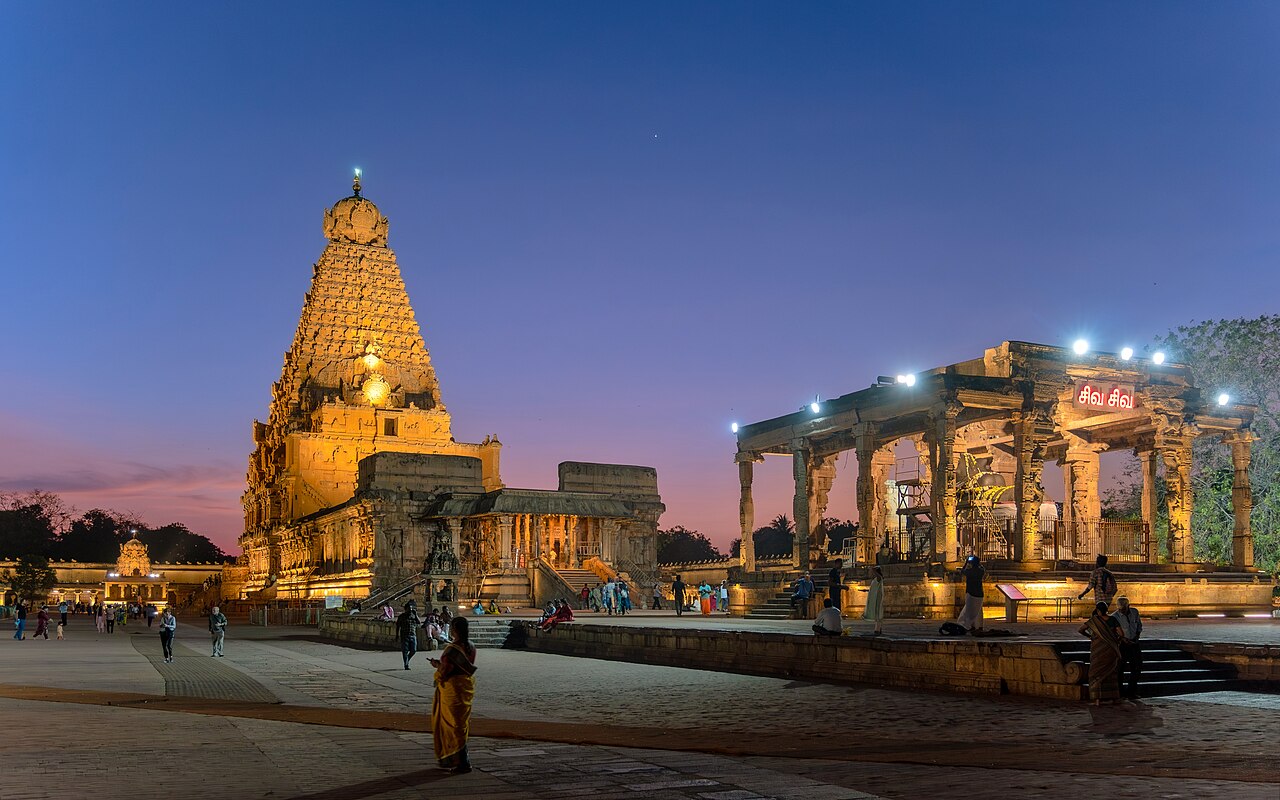
The property covers three temples: Brihadisvara at Thanjavur, Brihadisvara at Gangaikonda Cholapuram, and Airavatesvara at Darasuram. All three are Shaiva, all three are in continuous ritual use, and together they record the Chola dynasty's temple architecture across its peak and its refinement.
History
Rajaraja I completed the Thanjavur temple in 1010, financing it partly from campaign revenue and recording the endowments in inscriptions cut into the temple itself. His son Rajendra I built a new capital at Gangaikonda Cholapuram and a temple there around 1035. Airavatesvara at Darasuram followed under Rajaraja II in the twelfth century. Thanjavur was inscribed in 1987; the other two were added as an extension in 2004.
Architecture
Thanjavur's vimana — the tower over the sanctum — rises about sixty metres in thirteen diminishing storeys, capped by a single large stone. The temple is built in granite, which is not local to the immediate area and had to be brought in. Gangaikonda Cholapuram's tower is lower and its profile more curved. Airavatesvara is smaller and the most ornate of the three, with a stone chariot-form mandapa and finely cut miniature friezes.
Significance
The temples are simultaneously religious buildings, dynastic statements and archives: their walls carry inscriptions recording land grants, wages, temple staff and irrigation arrangements, which makes them one of the richest sources for how a medieval South Indian state actually operated.
UNESCO recognition
Inscribed in 1987, extended 2004, under criteria (i), (ii) and (iii) as outstanding creative achievements of Chola architecture and testimony to its civilisation.
More views
4 images