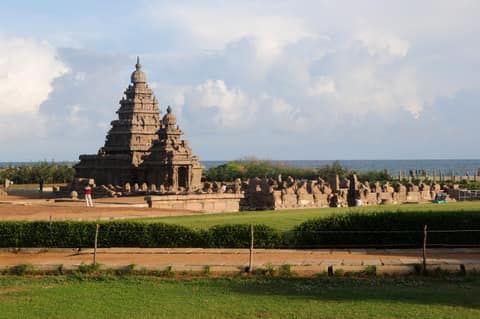
Group of Monuments at Pattadakal
Bagalkot district, Karnataka
- Inscribed
- 1987
- Period
- 7th–8th century CE
- Property
- Cultural
Pattadakal is a group of eight major temples and a number of smaller shrines on the bank of the Malaprabha river in northern Karnataka. It served the Chalukyas of Badami as a ceremonial site, and the temples were built largely in the seventh and eighth centuries.
History
The Chalukyas ruled the Deccan from Badami, with Aihole and Pattadakal as associated centres. Pattadakal was used for royal coronations. The Virupaksha temple was built by Queen Lokamahadevi around 740 to mark a Chalukyan victory over the Pallavas, and its architects appear to have drawn directly on Pallava work at Kanchipuram.
Architecture
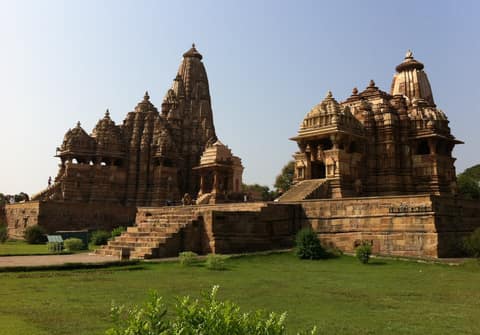
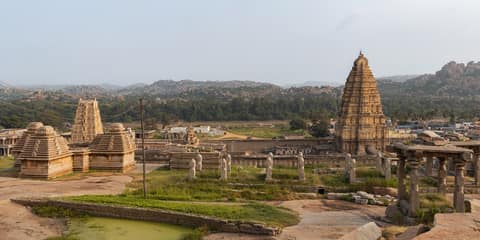
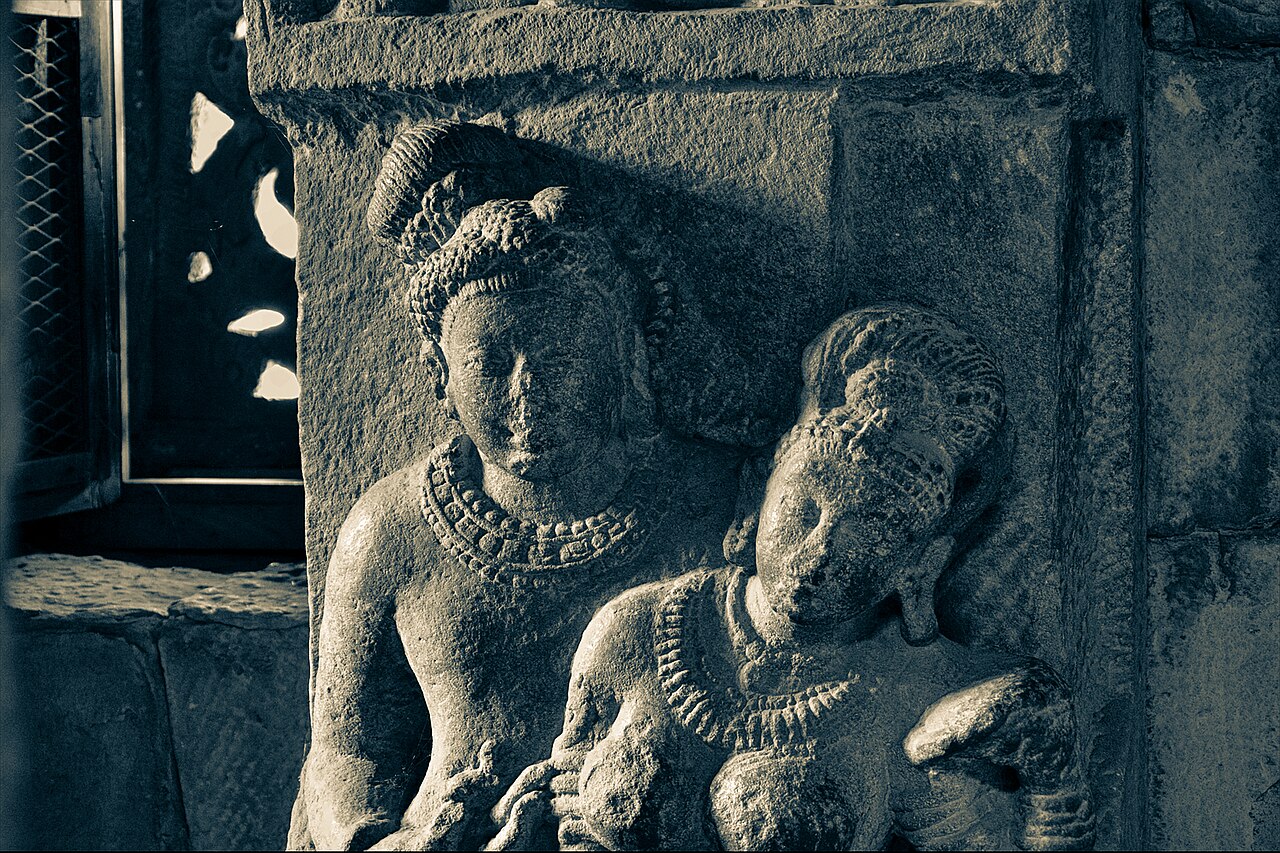
The interest of Pattadakal is that both principal Indian temple idioms appear together: four temples in the northern nagara style, with curved shikharas, and four in the southern dravida style, with stepped, storeyed vimanas. Virupaksha and Mallikarjuna are the largest of the southern group; Kashi Vishwanatha and Galaganatha represent the northern. The Jain temple sits slightly apart. Sculpture on the walls carries narrative sequences from the Ramayana, Mahabharata and Puranas.
Significance
Pattadakal is where the two great streams of Indian temple architecture can be compared directly, built by the same patrons within a short span. It is effectively a working laboratory of eighth-century architectural practice, preserved intact.
UNESCO recognition
Inscribed in 1987 under criteria (iii) and (iv) as an outstanding testimony to Chalukyan civilisation and an eclectic high point of temple architecture.
More views
4 images