


Humayun's Tomb
Delhi
- Inscribed
- 1993
- Period
- 1560s
- Property
- Cultural
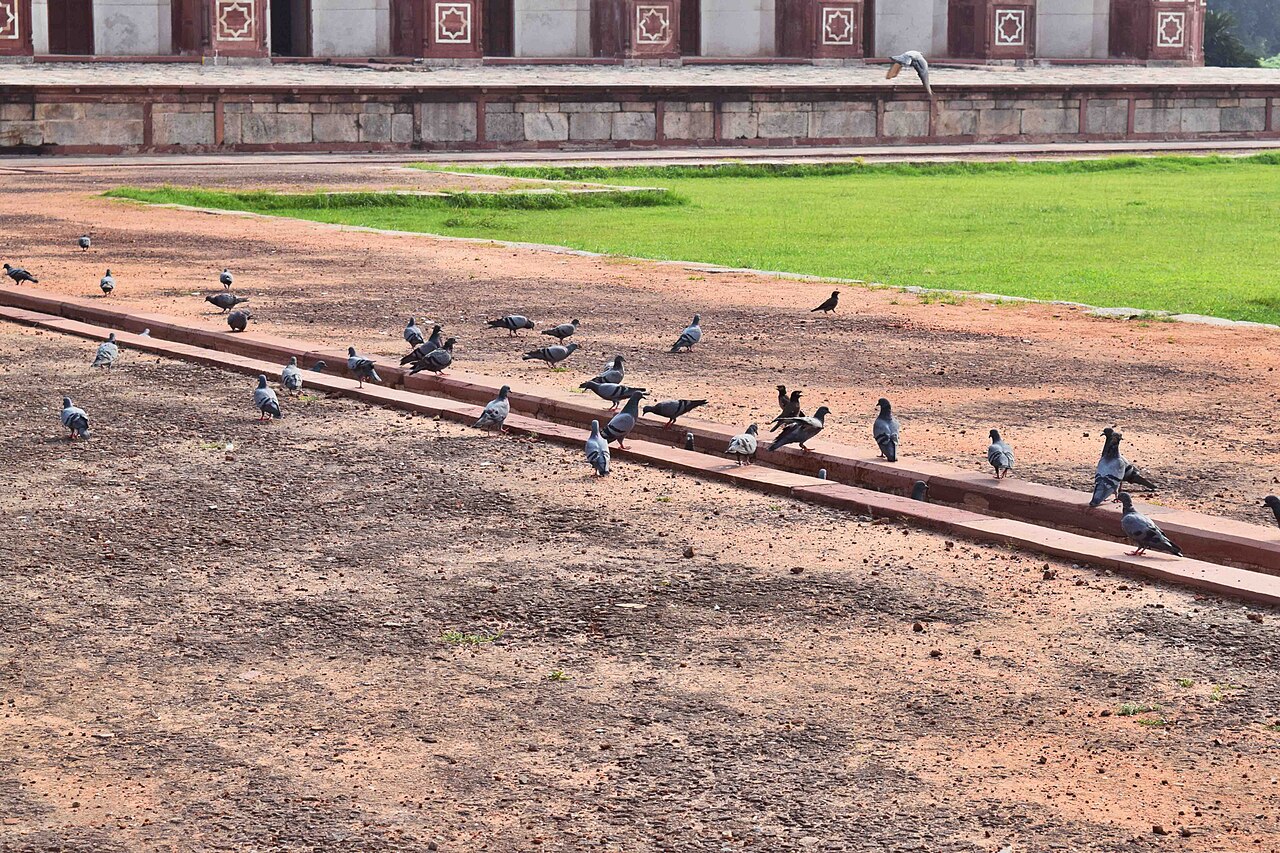
Humayun's Tomb stands in a walled garden in the Nizamuddin area of Delhi, built for the second Mughal emperor. It established, on Indian soil, the pattern that Mughal imperial tombs would follow for the next century: a monumental domed mausoleum raised on a plinth at the centre of a formal charbagh.
History
Humayun died in 1556. The tomb was commissioned by his widow, Bega Begum, and completed around 1570, with Mirak Mirza Ghiyas named as architect. The complex declined with the empire, and the gardens were substantially altered under British occupation. A major conservation programme from the late 1990s restored the water channels and garden layout.
Architecture
The mausoleum is built in red sandstone with white marble inlay and stands on a high arcaded plinth containing further graves. It carries a double dome — an inner shell shaping the chamber below and an outer shell giving the external profile — an approach later used at the Taj Mahal. The charbagh divides the garden into four quarters with intersecting water channels and paths, a plan carrying Persian precedent into India at scale.
Significance
Nearly everything that makes the Taj Mahal what it is appears here first: the garden tomb, the double dome, the plinth, the strict symmetry. It is also the point at which Persian form and Indian material and craft settle into a single working style.
UNESCO recognition
Inscribed in 1993 under criteria (ii) and (iv) for its influence on later architecture and as an outstanding example of the Mughal garden tomb.
More views
4 images