
Dholavira: A Harappan City
Kachchh district, Gujarat
- Inscribed
- 2021
- Period
- c. 3000–1500 BCE
- Property
- Cultural
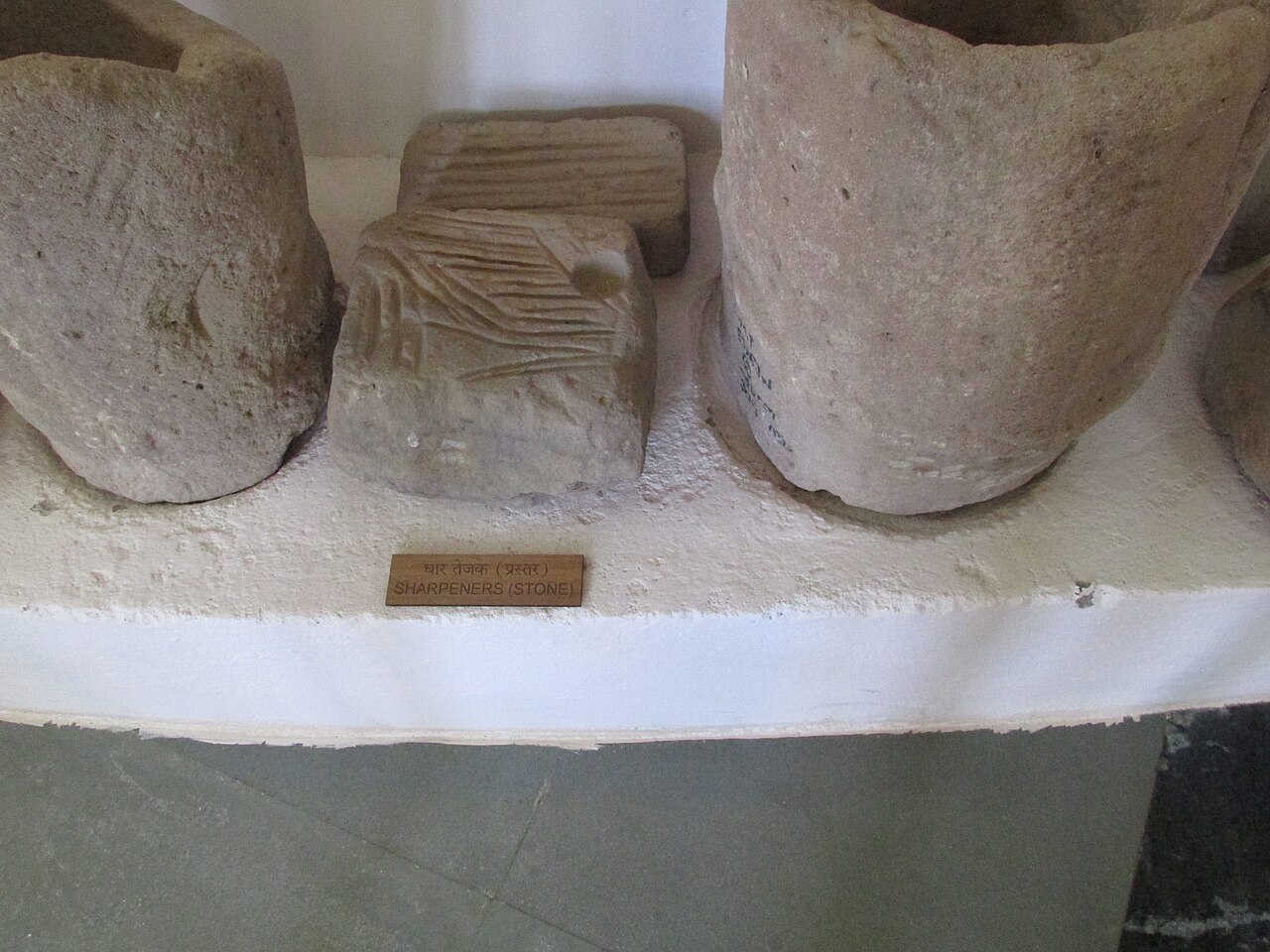
Dholavira occupies Khadir island in the Rann of Kachchh and is one of the largest Harappan sites in India. Unlike the brick-built cities of the Indus plain, it was constructed largely in stone, and its most striking feature is a cascading network of water reservoirs.
History
The site was occupied from roughly 3000 to 1500 BCE, through a full sequence from an early phase to the post-urban decline, which makes it valuable for tracking the civilisation's whole arc in one place. It was discovered in 1967 by J. P. Joshi and excavated substantially from 1989 under R. S. Bisht.
Architecture
The city divides into a fortified castle, a bailey, a middle town and a lower town, with an unusually large open ceremonial ground between them. Sixteen or more reservoirs, cut and built in stone, collected monsoon runoff from two seasonal streams — a water-conservation system on a scale not seen elsewhere in the civilisation, and the direct response to an arid site. A ten-sign inscription in large gypsum letters, the so-called Dholavira signboard, was found near the north gate.
Significance
Dholavira shows the Harappan urban model adapted to an extreme environment, with water management as the organising principle of the whole plan. Its stone construction and complete occupation sequence make it a distinct and unusually legible case among Indus sites.
UNESCO recognition
Inscribed in 2021 under criteria (iii) and (iv) as exceptional testimony to the Harappan civilisation and an outstanding example of its urban planning.
More views
4 images