



Historic City of Ahmadabad
Ahmedabad, Gujarat
- Inscribed
- 2017
- Period
- 15th century onward
- Property
- Cultural
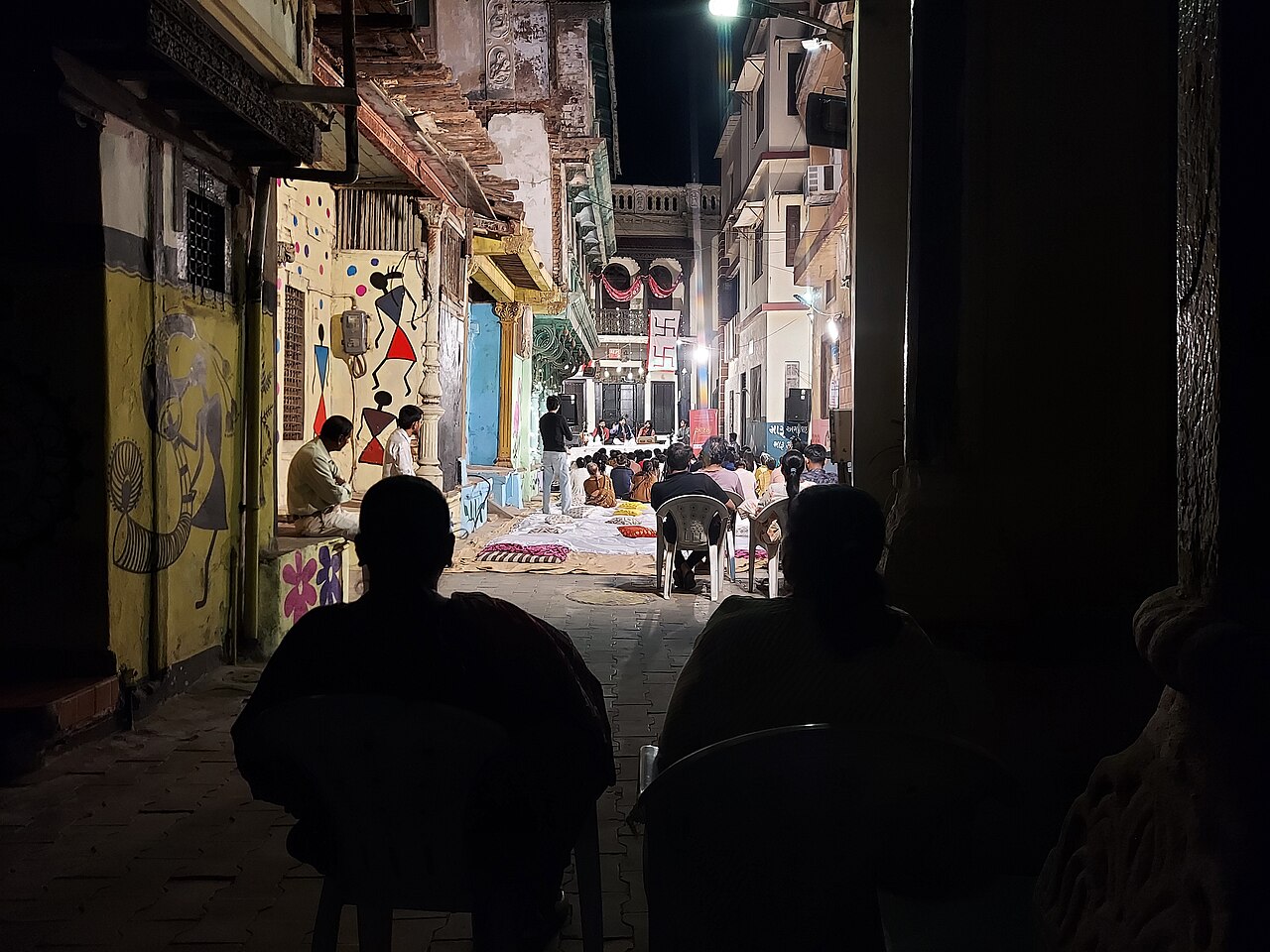
The inscribed area is the walled city on the east bank of the Sabarmati, founded by Sultan Ahmad Shah. It comprises mosques and tombs of the sultanate period, Hindu and Jain temples, and the dense residential fabric of the pols — gated neighbourhood clusters with shared courtyards, wells and bird feeders.
History
Ahmad Shah I founded the city in 1411 as the capital of the Gujarat Sultanate. It became a major centre of textile production and trade, passed to the Mughals in 1573, and continued as a commercial city under later regimes and into the colonial period. It was the base for much of Gandhi's activity in India from 1915.
Architecture
The sultanate architecture of Gujarat is distinctive for absorbing local temple craft: minarets, mihrabs and domes executed with the carving vocabulary of Hindu and Jain masons. The Jami Masjid of 1424 stands on some 260 columns. The Sidi Saiyyed Mosque's pierced stone tracery window, cut as an intertwined tree, is the city's emblem. Beyond the monuments, the pols form a residential typology of narrow streets, timber-fronted houses and internal courtyards.
Significance
Ahmadabad was the first Indian city inscribed as a whole rather than as a set of monuments, recognising an urban fabric where sultanate architecture, Hindu and Jain building, and a distinctive residential pattern have coexisted for six centuries.
UNESCO recognition
Inscribed in 2017 under criteria (ii) and (v) for the interchange of architectural traditions and as an outstanding example of a traditional human settlement.
More views
4 images