Ajanta Caves
Aurangabad, Maharashtra
- Inscribed
- 1983
- Period
- 2nd century BCE – 6th century CE
- Property
- Cultural
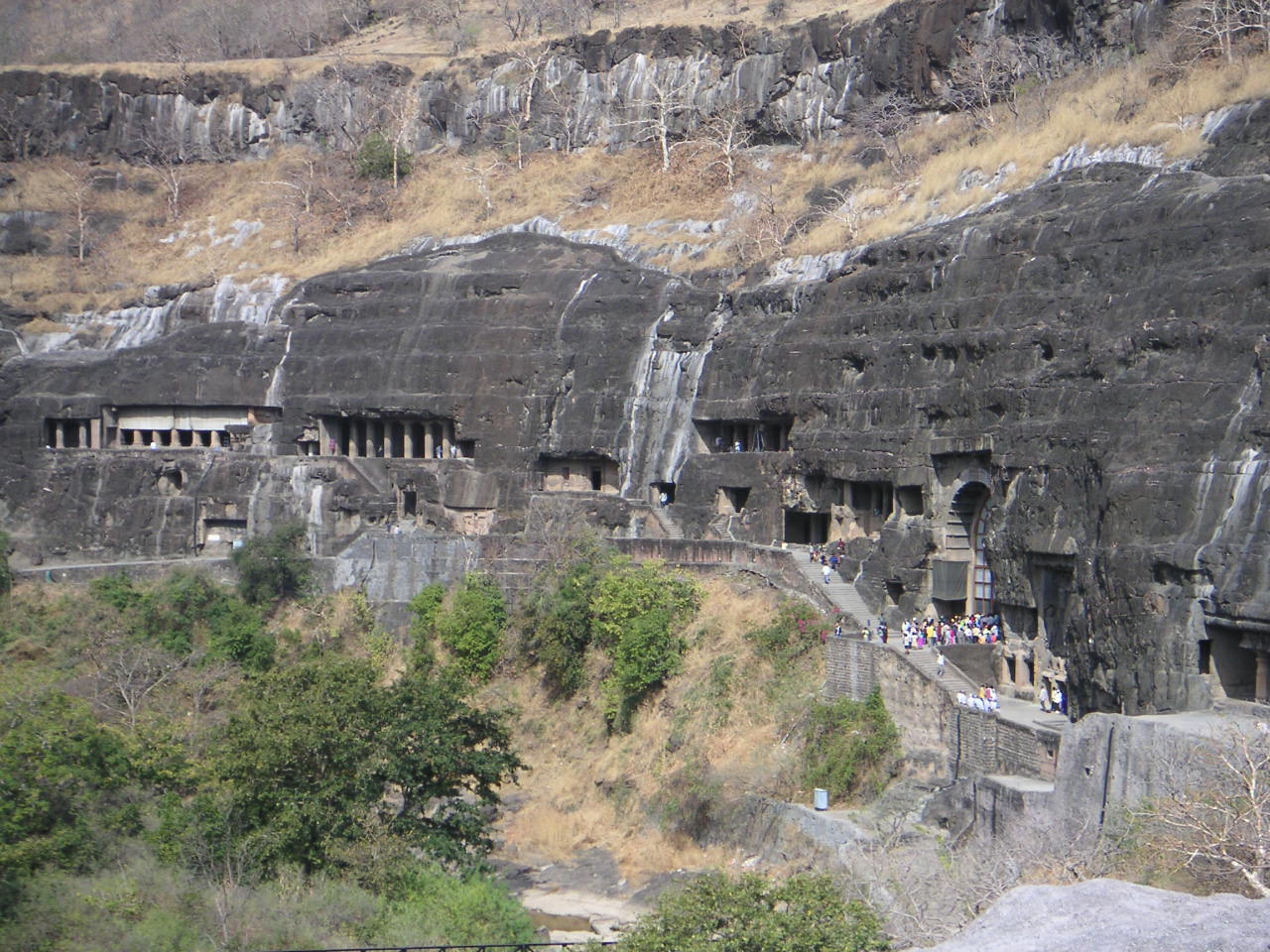
The Ajanta Caves are 30 rock-cut Buddhist cave monuments dating from the 2nd century BCE to about 480 CE. Cut into a horseshoe-shaped cliff overlooking the Waghora River, they contain some of the finest surviving examples of ancient Indian painting, sculpture, and architectural design.
History
The caves were carved in two distinct phases: the earlier Satavahana phase (2nd century BCE – 1st century CE) and the later Vakataka phase (5th–6th century CE). After the decline of Buddhism in India, the caves were abandoned and forgotten, hidden by jungle for over a thousand years. They were rediscovered in 1819 by a British officer, John Smith, during a tiger hunt.
Architecture
The caves include both viharas (monasteries) and chaityas (prayer halls). The most celebrated are Cave 1 (the Padmapani and Vajrapani Bodhisattva paintings), Cave 2 (the famous Yakshi hanging from a tree), Cave 10 (the oldest chaitya), and Cave 26 (a Buddhist chaitya with elaborate sculptural decoration). The murals depict the Jataka tales — stories of the Buddha's previous lives — with extraordinary naturalism and emotional depth.
Significance
Ajanta's murals represent the zenith of ancient Indian painting. They are the only surviving examples of the Ajanta school of painting, which profoundly influenced art across Asia — from Sri Lanka to Japan. The caves also provide invaluable documentation of the social life, costume, and architecture of ancient India.
UNESCO recognition
Inscribed under Criteria (i) as a masterpiece of creative genius and (ii) for its outstanding influence on the art of Buddhism across Asia.
More views
6 images