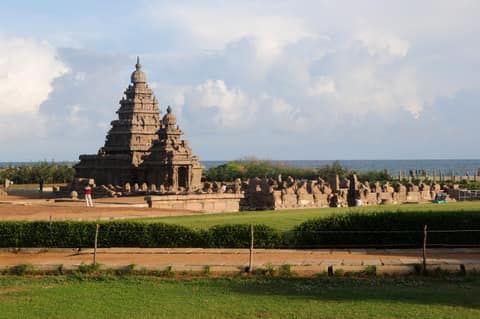
Group of Monuments at Hampi
Vijayanagara, Karnataka
- Inscribed
- 1986
- Period
- 14th–16th century
- Property
- Cultural
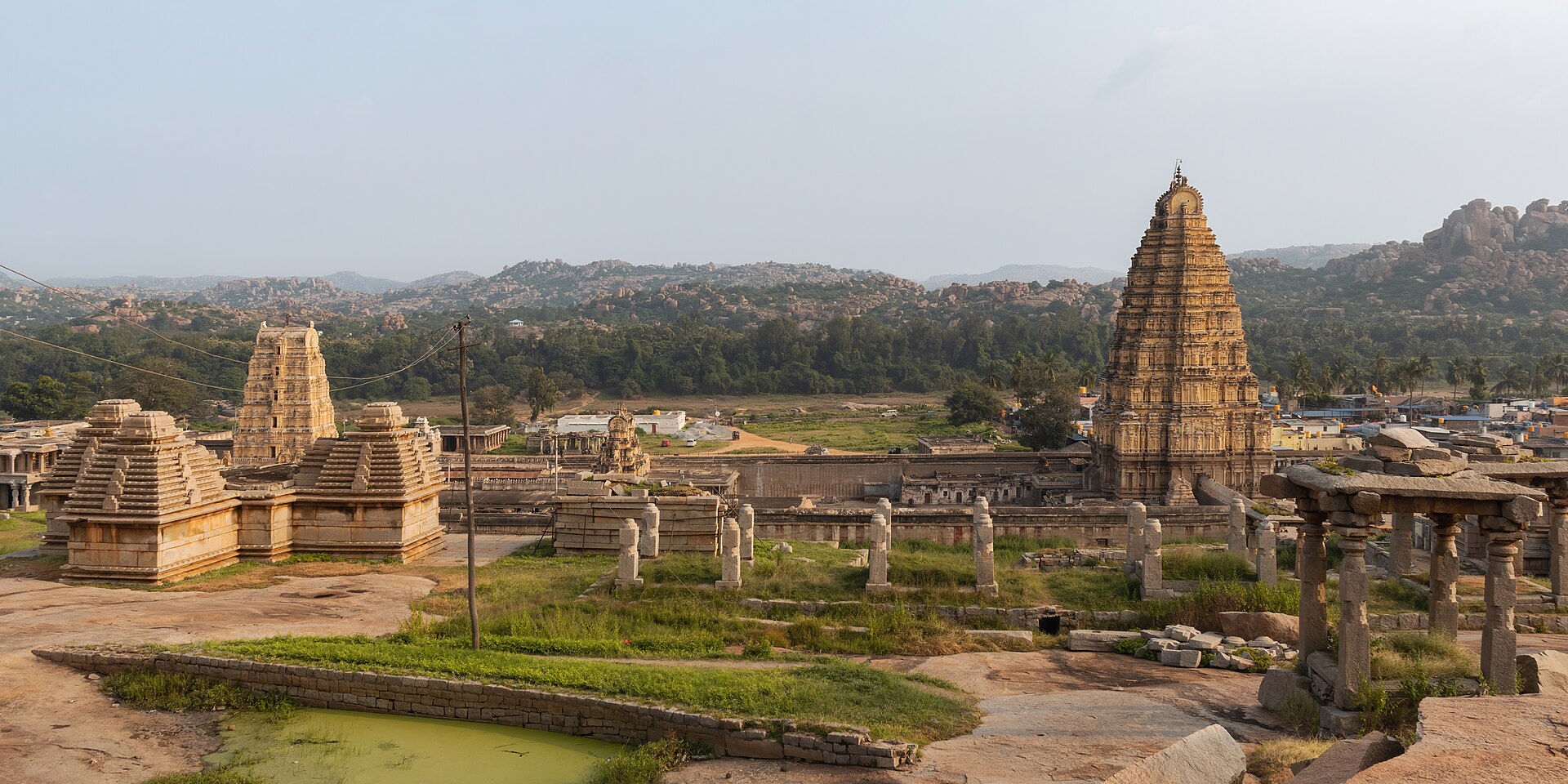
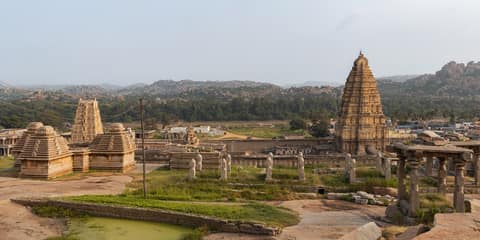
Hampi was the capital of the Vijayanagara Empire, one of the richest and largest cities in the world during its peak. The ruins spread over 26 square kilometres contain exceptional groups of monuments — temples, fortifications, market streets, royal and sacred complexes — that tell the story of a flourishing medieval city.
History
Founded in 1336 by Harihara I and Bukka Raya I of the Sangama dynasty, Hampi grew into a thriving cosmopolitan centre. At its peak in the 15th century, it housed hundreds of thousands of residents and was famed for its markets dealing in diamonds and spices. In 1565, the city was sacked by a coalition of Deccan Sultanates after the Battle of Talikota. It was never rebuilt, and the ruins were gradually reclaimed by nature.
Architecture
The Hampi landscape is extraordinary — hundreds of massive granite boulders balanced precariously on hillsides, with temples and palaces nestled between them. Key structures include the Virupaksha Temple (still active), the Vittala Temple with its famous stone chariot and musical pillars, the Lotus Mahal, the Elephant Stables, and the massive stone gateway of the Hazara Rama Temple. The architecture blends Dravidian temple styles with Islamic influences from the Deccan.
Significance
Hampi is a testament to the wealth and cultural sophistication of the Vijayanagara Empire, which was one of the last great Hindu kingdoms. The ruins provide an exceptionally complete picture of a medieval Indian city — from the royal precinct to the merchant quarters, from sacred complexes to markets. The landscape itself, with its dramatic boulder-strewn terrain, is integral to the site's identity.
UNESCO recognition
Inscribed under Criteria (i) as a masterpiece of human creative genius, (iii) as an outstanding testimony to a vanished civilization, and (iv) as an exceptional example of a type of building or architectural ensemble.
More views
6 images