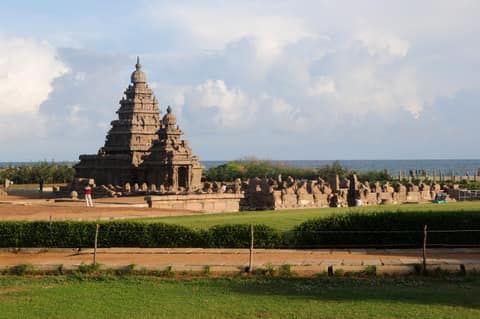
Sun Temple, Konârak
Puri, Odisha
- Inscribed
- 1984
- Period
- 13th century
- Property
- Cultural
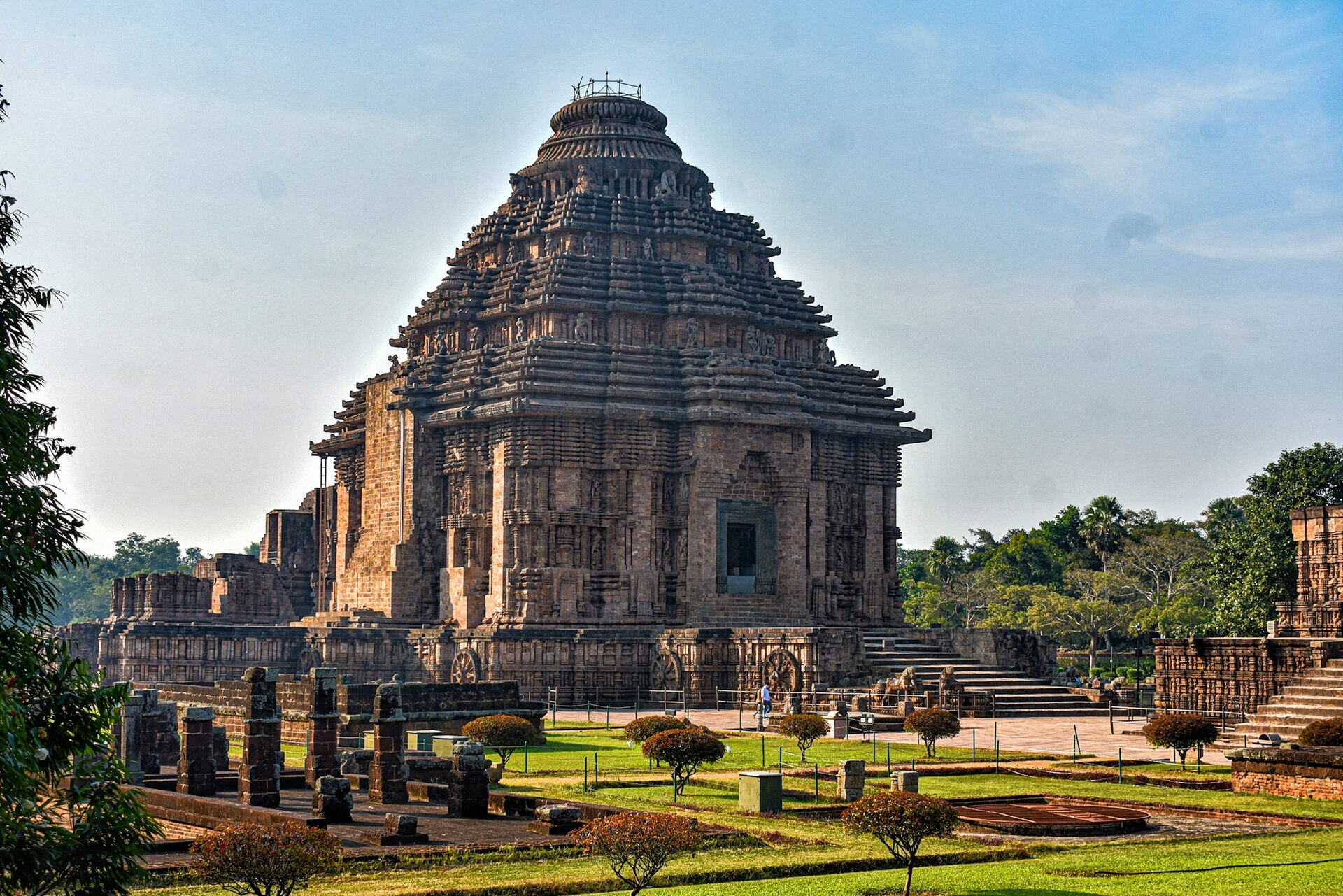
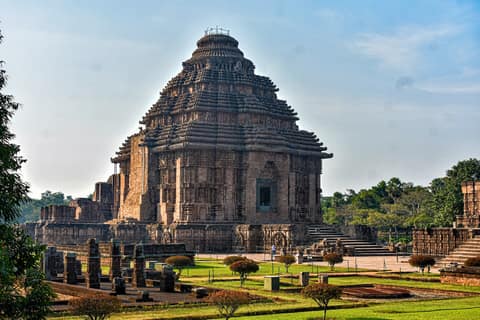
The Konark Sun Temple is a 13th-century Hindu temple dedicated to the sun god Surya. Located on the eastern shore of Odisha, it is designed in the form of a giant chariot with 24 elaborately carved stone wheels, pulled by seven horses. The temple is one of the most renowned examples of Kalinga architecture.
History
Built around 1250 CE by King Narasimhadeva I of the Eastern Ganga dynasty, the temple was intended to be the crown jewel of Odisha's temple tradition. However, within a century of its construction, the main sanctum collapsed — possibly due to structural instability, invasion, or natural disasters. The British attempted to remove the wheels and horses in the early 20th century but abandoned the effort when one wheel sank into the sand.
Architecture
The temple is designed as a colossal chariot of Surya, standing on 24 wheels each about 3 metres in diameter. The wheels are not merely decorative — they function as sundials that can be used to calculate time accurately to within minutes. The main entrance is flanked by two enormous lions, each standing on a human figure. The walls are covered with intricate carvings of musicians, dancers, erotic figures, and geometric patterns.
Significance
The Sun Temple at Konark represents the culmination of Odisha's temple-building tradition and is considered one of the finest examples of Indian temple architecture. The mathematical precision of the wheels and the artistic excellence of the sculpture demonstrate the advanced state of science and art in medieval India. It is featured on the reverse side of the Indian ₹10 coin.
UNESCO recognition
Inscribed under Criteria (i) for its extraordinary architectural and sculptural genius, and (iii) as an outstanding testimony to the Kalinga school of architecture.
More views
5 images