Khajuraho Group of Monuments
Chhatarpur, Madhya Pradesh
- Inscribed
- 1986
- Period
- 950–1050 CE
- Property
- Cultural
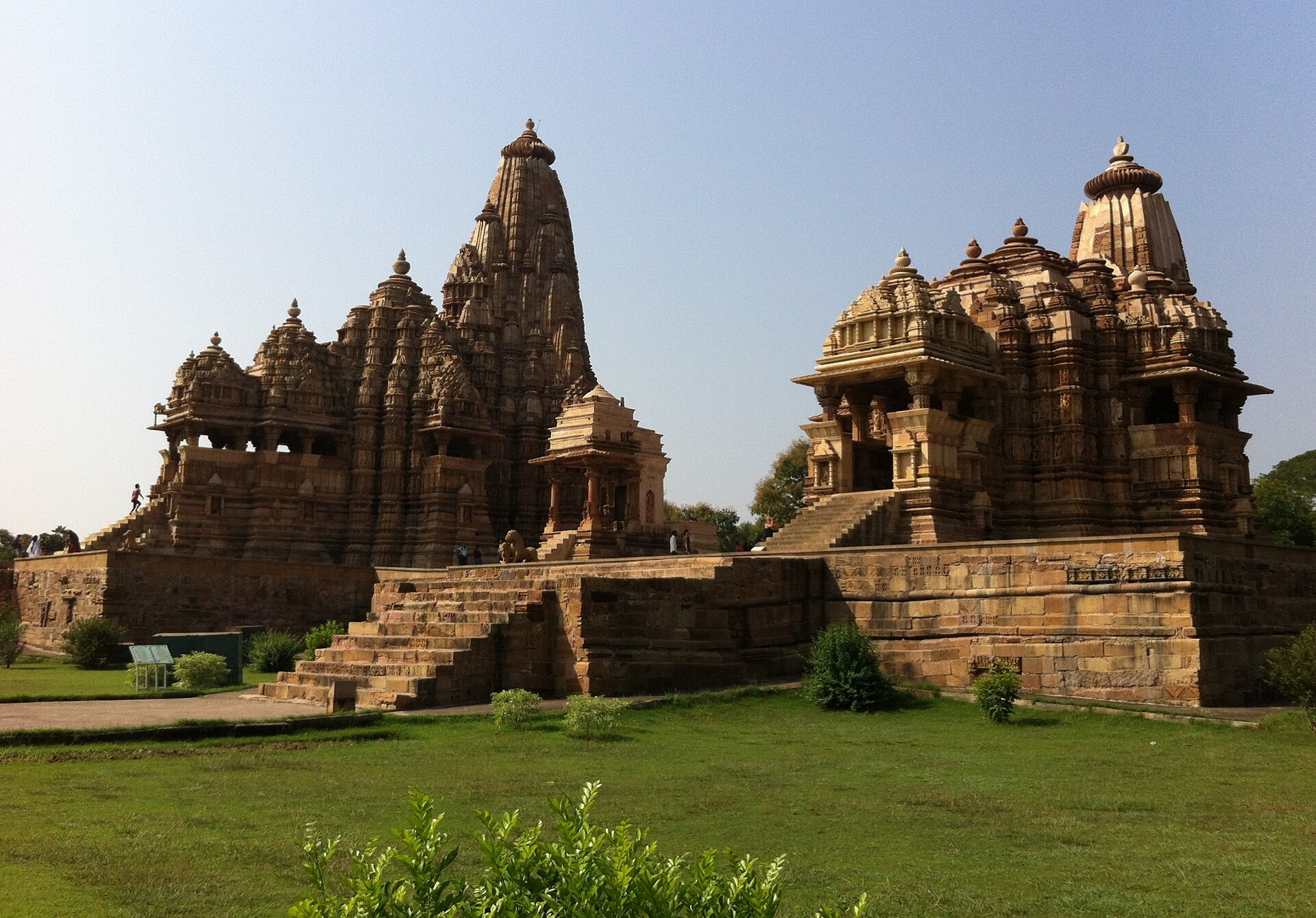
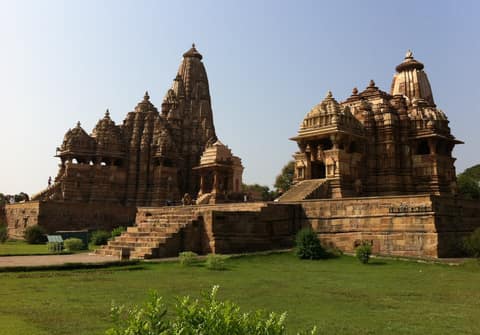
The Khajuraho Group of Monuments is a group of Hindu and Jain temples in Madhya Pradesh. They are one of the seven UNESCO World Heritage Sites in India. Famous for their erotic sculptures, the temples represent a celebration of human existence in all its forms — spiritual, social, and sensual.
History
Built between 950 and 1050 CE by the Chandela dynasty, the original complex contained around 85 temples spread over 20 square kilometres. Over centuries of neglect, many were reclaimed by the jungle. By the time the British surveyed the area in the 1830s, only 25 remained. The temples were rediscovered and brought to international attention in the late 19th century.
Architecture
The temples are built of sandstone and follow a common plan: a pyramidal tower (shikhara) over the sanctum, a mandapa (hall), and an entrance porch. They are arranged in three groups: Western (the most famous, including Kandariya Mahadeva), Eastern, and Southern. The sculptural program covers every surface — divine figures, celestial nymphs, musicians, animals, and scenes of daily life are carved in high relief.
Significance
Khajuraho is celebrated for its celebration of the fullness of human life. The erotic sculptures, which comprise roughly 10% of the total decoration, are found primarily on the outer walls and represent the Tantric tradition of celebrating the union of male and female principles. The temples demonstrate extraordinary mastery of stone carving and architectural engineering.
UNESCO recognition
Inscribed under Criteria (i) as a masterpiece of creative genius and (iii) as an outstanding example of Indian temple architecture and sculpture.
More views
5 images