

Champaner-Pavagadh Archaeological Park
Panchmahal district, Gujarat
- Inscribed
- 2004
- Period
- 8th–16th century
- Property
- Cultural
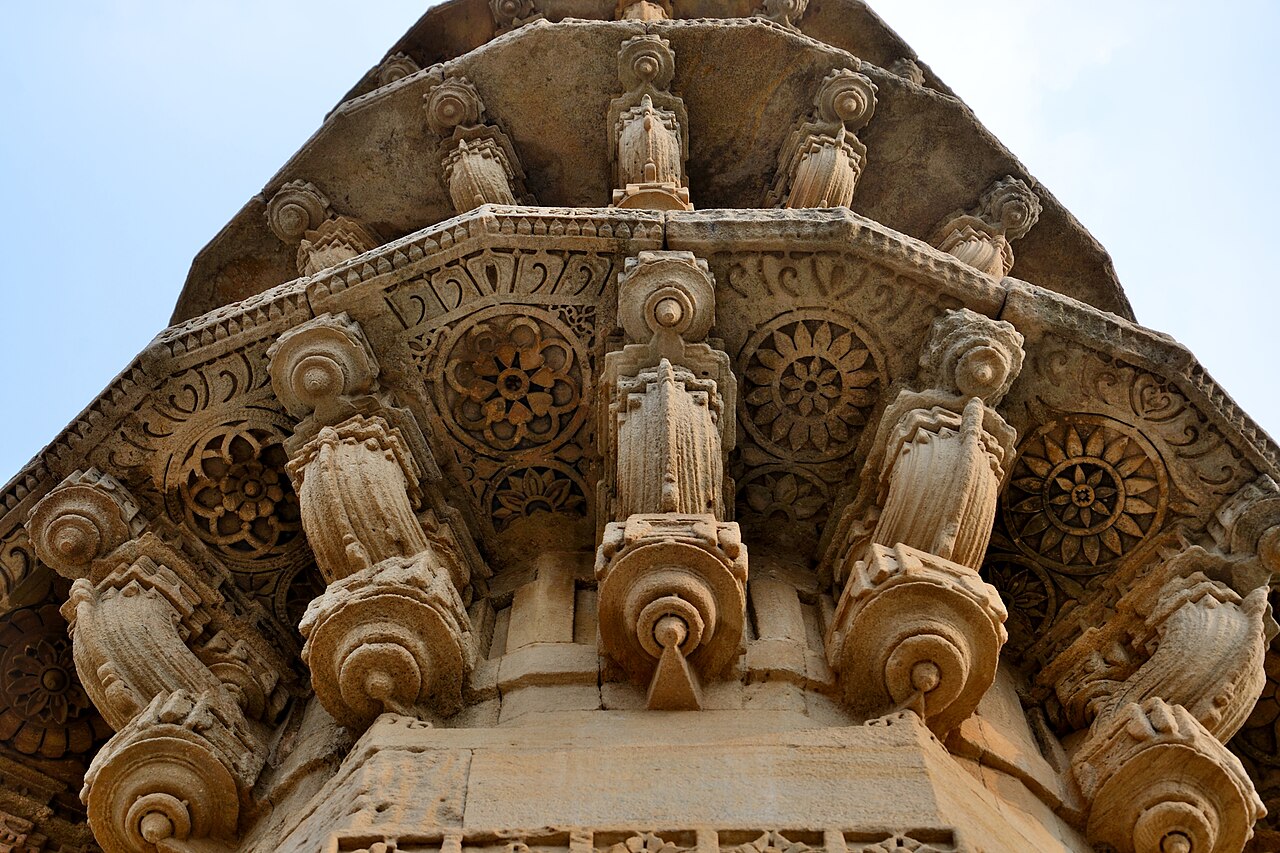
The property covers the ruined city of Champaner on the plain and the fortified hill of Pavagadh above it, together with prehistoric sites, hill forts, palaces, religious buildings, residential quarters and water installations spanning roughly eight centuries.
History
Pavagadh was held by successive Rajput rulers before Sultan Mahmud Begada took it in 1484 after a long siege and made Champaner his capital, renaming it Muhammadabad. The city flourished briefly and was effectively abandoned after the Mughal conquest in 1535, when the capital returned to Ahmedabad. It was never substantially rebuilt.
Architecture
The Jami Masjid, completed around 1513, is the principal building: a large congregational mosque with two tall carved minarets, a richly worked entrance porch, and more than a hundred pillars, blending Islamic form with Gujarati craft detail. Other structures include the Kevada Masjid, the Nagina Masjid, stepwells and an extensive water-management system. The Kalika Mata temple on the summit of Pavagadh remains an important pilgrimage site.
Significance
Because Champaner was abandoned rather than overbuilt, it preserves a pre-Mughal Islamic capital essentially as it stood — a condition UNESCO notes as unique. The site also shows Hindu and Islamic architecture in the same landscape, with the hill shrine still in active worship above the ruined city.
UNESCO recognition
Inscribed in 2004 under criteria (iii), (iv), (v) and (vi) for its testimony, its architecture, its settlement pattern and its living religious associations.
More views
4 images