Churches and Convents of Goa
Velha Goa, Goa
- Inscribed
- 1986
- Period
- 16th–17th century
- Property
- Cultural
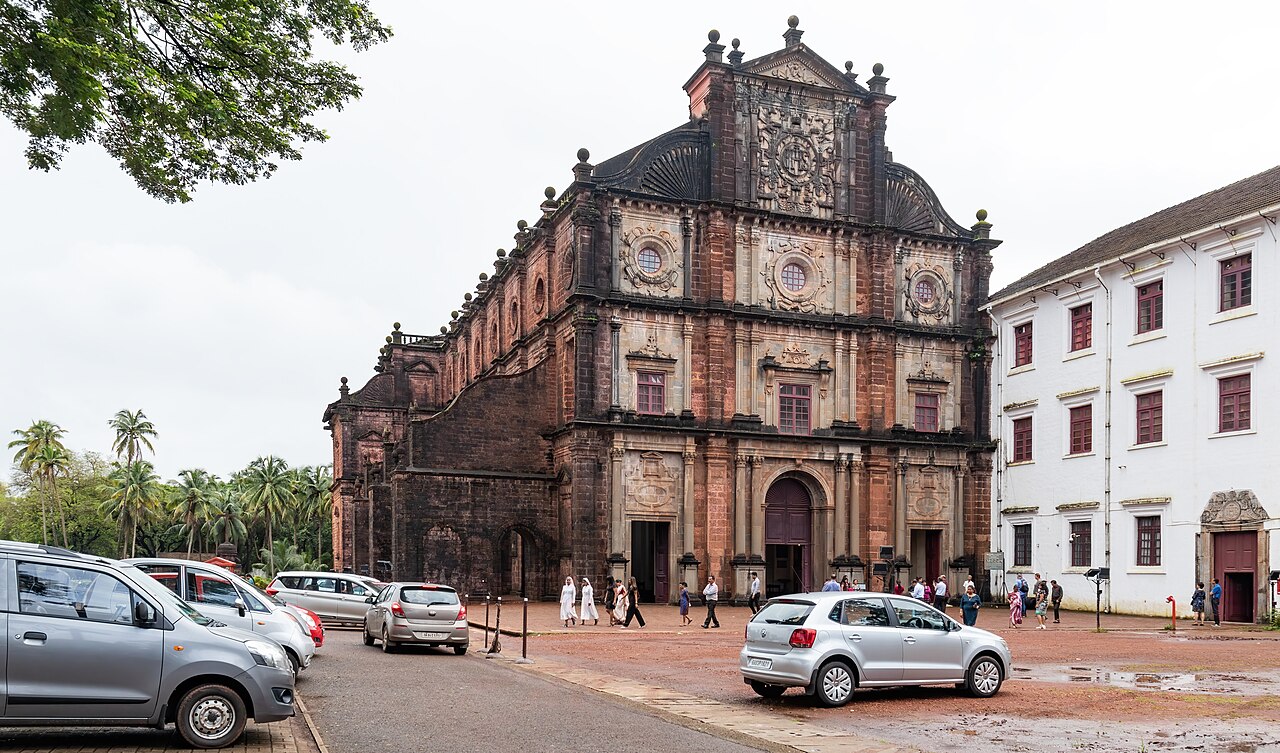
The property covers the churches and convents of Old Goa, the former Portuguese colonial capital on the Mandovi river. What survives is a group of monumental religious buildings; the surrounding city was largely abandoned after repeated epidemics and is now mostly cleared ground.
History
The Portuguese took Goa in 1510 and made it the seat of their Estado da Índia. Church building followed through the sixteenth and seventeenth centuries. Malaria and cholera outbreaks from the seventeenth century onward emptied the city, and the administration moved downriver to Panjim in the eighteenth. The religious buildings remained.
Architecture
The Basilica of Bom Jesus, completed in 1605, is built in exposed laterite with a Baroque facade and holds the remains of St Francis Xavier in a silver casket on a marble monument. The Sé Cathedral, the largest church in Asia when finished, is Portuguese-Manueline outside and Corinthian within. The Church of St Francis of Assisi, the Chapel of St Catherine and the tower of St Augustine complete the principal group. Construction is in local laterite, often plastered, with limestone and timber detail worked by Indian craftsmen.
Significance
These buildings carried European ecclesiastical architecture into Asia and became the model for churches across the Portuguese sphere from Africa to Japan. They also record what happens when an imported style meets local material: laterite behaves nothing like European stone, and the buildings show it.
UNESCO recognition
Inscribed in 1986 under criteria (ii), (iv) and (vi) for the spread of these forms across Asia and their association with the evangelisation of the region.
More views
4 images