
Great Himalayan National Park Conservation Area
Kullu district, Himachal Pradesh
- Inscribed
- 2014
- Period
- National park from 1999
- Property
- Natural
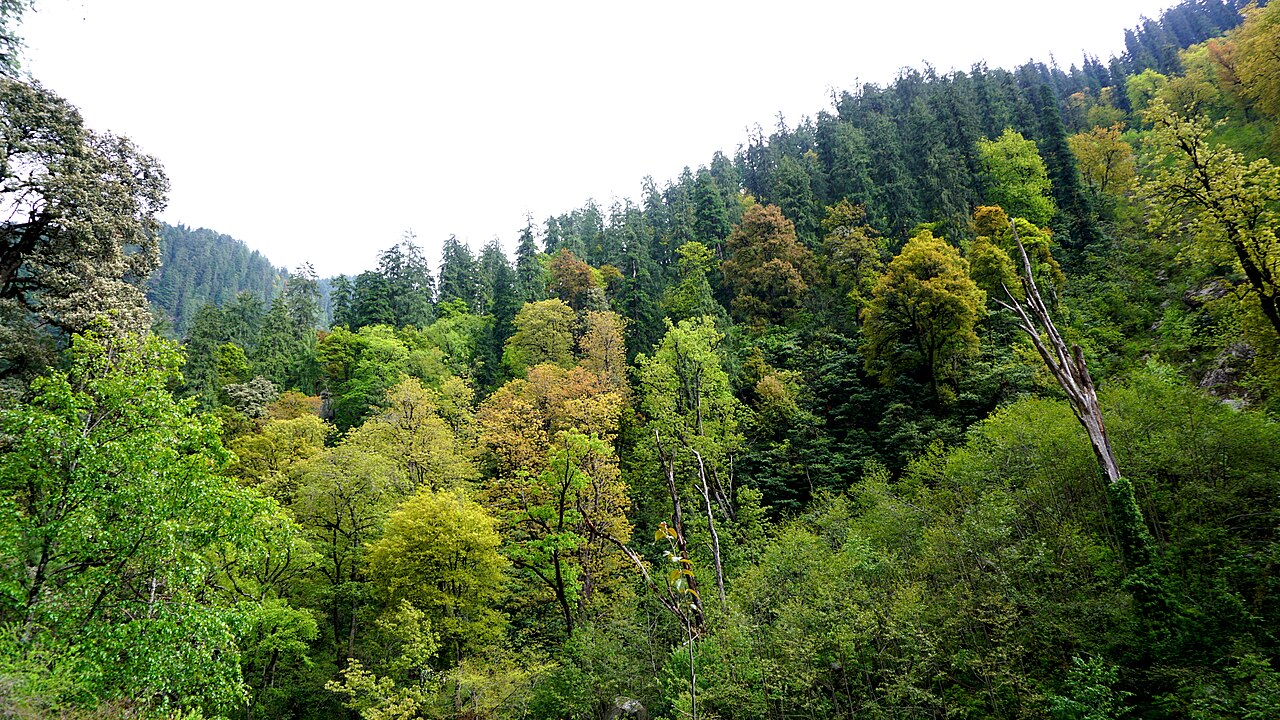
The conservation area covers the upper catchments of the Jiwa Nal, Sainj, Tirthan and Parvati rivers in the Kullu district of Himachal Pradesh, protecting a continuous sequence from valley forest up to high alpine zones and glaciers.
History
The park was established in 1984 and formally notified in 1999. Its creation displaced traditional grazing and medicinal-plant collection rights, and a substantial part of the subsequent management effort has gone into ecodevelopment arrangements with the villages around the boundary. It was inscribed in 2014.
Landscape and wildlife
Altitude ranges from around 1,500 to over 6,000 metres, which compresses several life zones into a short horizontal distance. Vegetation runs from deodar and oak forest through birch to alpine meadow and permanent snow. The park protects populations of western tragopan, Himalayan monal, musk deer, blue sheep, Himalayan brown bear and snow leopard. Because the entire catchment is protected, the rivers rise inside the property.
Significance
Protecting complete catchments rather than fragments is what makes this property unusual: the hydrological system it contains is intact from source downward. It sits within the Western Himalaya biodiversity hotspot and holds species with very restricted ranges.
UNESCO recognition
Inscribed in 2014 under criterion (x) for the significance of its habitats for in-situ conservation of biological diversity.
More views
2 images