Group of Monuments at Mahabalipuram
Chengalpattu, Tamil Nadu
- Inscribed
- 1984
- Period
- 7th–8th century
- Property
- Cultural
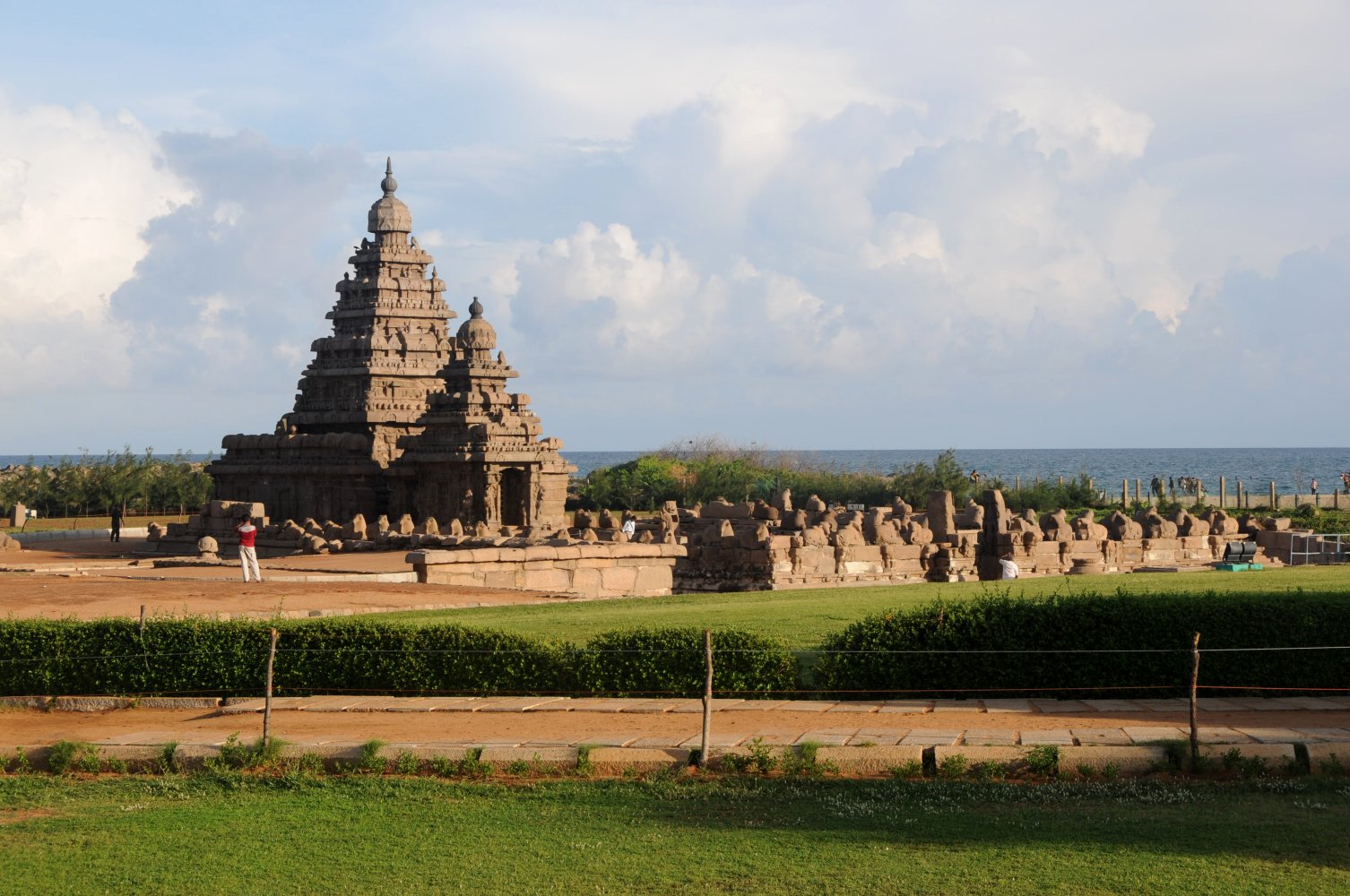
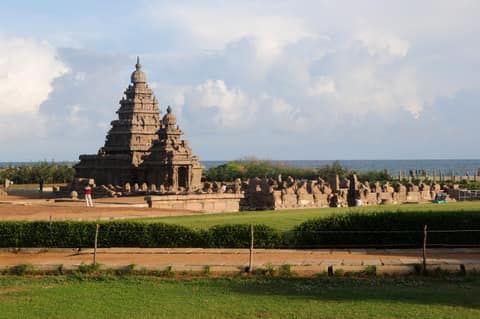
The Group of Monuments at Mahabalipuram includes rock-cut cave temples, monolithic rathas (chariots), structural temples, and open-air bas-reliefs. Created during the Pallava dynasty in the 7th and 8th centuries, they represent some of the earliest examples of Dravidian architecture.
History
Mahabalipuram was a thriving port city of the Pallava dynasty, the first great patrons of South Indian temple architecture. King Narasimhavarman I (630–668 CE) initiated the monument-building program, and his successor Narasimhavarman II completed it. The famous Tsunami of 2004 revealed submerged ruins off the coast, confirming medieval accounts of a 'Seven Pagodas' — six of which remain underwater.
Architecture
The monuments include five monolithic rathas (Dharmaraja, Bhima, Arjuna, Nakula-Sahadeva, and Draupadi), each carved from a single granite boulder. Cave temples like the Mahishasuramardini Mandapa contain exquisite relief panels. The Descent of the Ganges (also called Arjuna's Penance) is one of the world's largest open-air bas-reliefs — 27 by 9 metres — depicting the river Ganges descending from heaven. A natural cleft in the rock once channelled water over the carved figures.
Significance
Mahabalipuram marks the transition from rock-cut to structural temple architecture in South India. The rathas served as prototypes for later Dravidian temple forms. The site demonstrates the Pallava mastery of granite carving and their pioneering role in Indian temple architecture. It remains an active centre of stone carving today.
UNESCO recognition
Inscribed under Criteria (i), (ii), (iii), and (vi) — as an outstanding example of Pallava art and architecture, and for its influence on the development of South Indian temple forms.
More views
5 images