




Manas Wildlife Sanctuary
Assam
- Inscribed
- 1985
- Period
- Protected from 1928
- Property
- Natural
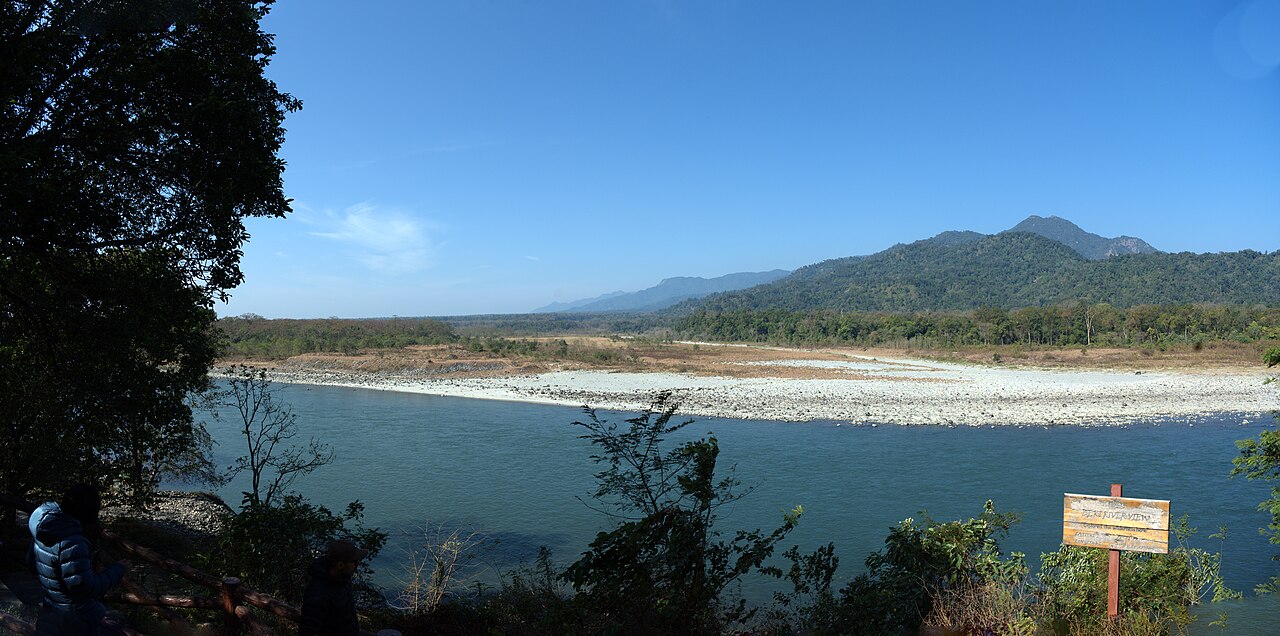
Manas lies on a gentle slope of the Himalayan foothills in western Assam, on the border with Bhutan, where the Manas river leaves the hills. It combines alluvial grassland, tropical evergreen and moist deciduous forest, and continues across the border as Bhutan's Royal Manas National Park.
History
Declared a sanctuary in 1928 and inscribed in 1985, Manas was placed on the List of World Heritage in Danger in 1992 following civil unrest during which infrastructure was destroyed and rhino were wiped out locally. It was removed from the danger list in 2011 after sustained restoration work, including rhino translocation, much of it involving local Bodo communities.
Landscape and wildlife
The sanctuary spans the transition from Himalayan foothill forest to the floodplain grasslands of the Brahmaputra basin, which accounts for its unusual species range. It holds populations of tiger, Asian elephant, greater one-horned rhinoceros and wild water buffalo, together with rarities including the pygmy hog, hispid hare, golden langur and Bengal florican — several of which have their most significant populations here.
Significance
Manas is both an exceptional biodiversity site and a demonstration that a property can be brought back from the danger list. The recovery depended on the participation of the communities living around it rather than on exclusion.
UNESCO recognition
Inscribed in 1985 under criteria (vii), (ix) and (x) for its natural beauty, ongoing ecological processes and biodiversity significance.
More views
3 images