

Maratha Military Landscapes of India
Maharashtra and Tamil Nadu
- Inscribed
- 2025
- Period
- 17th–19th century
- Property
- Cultural
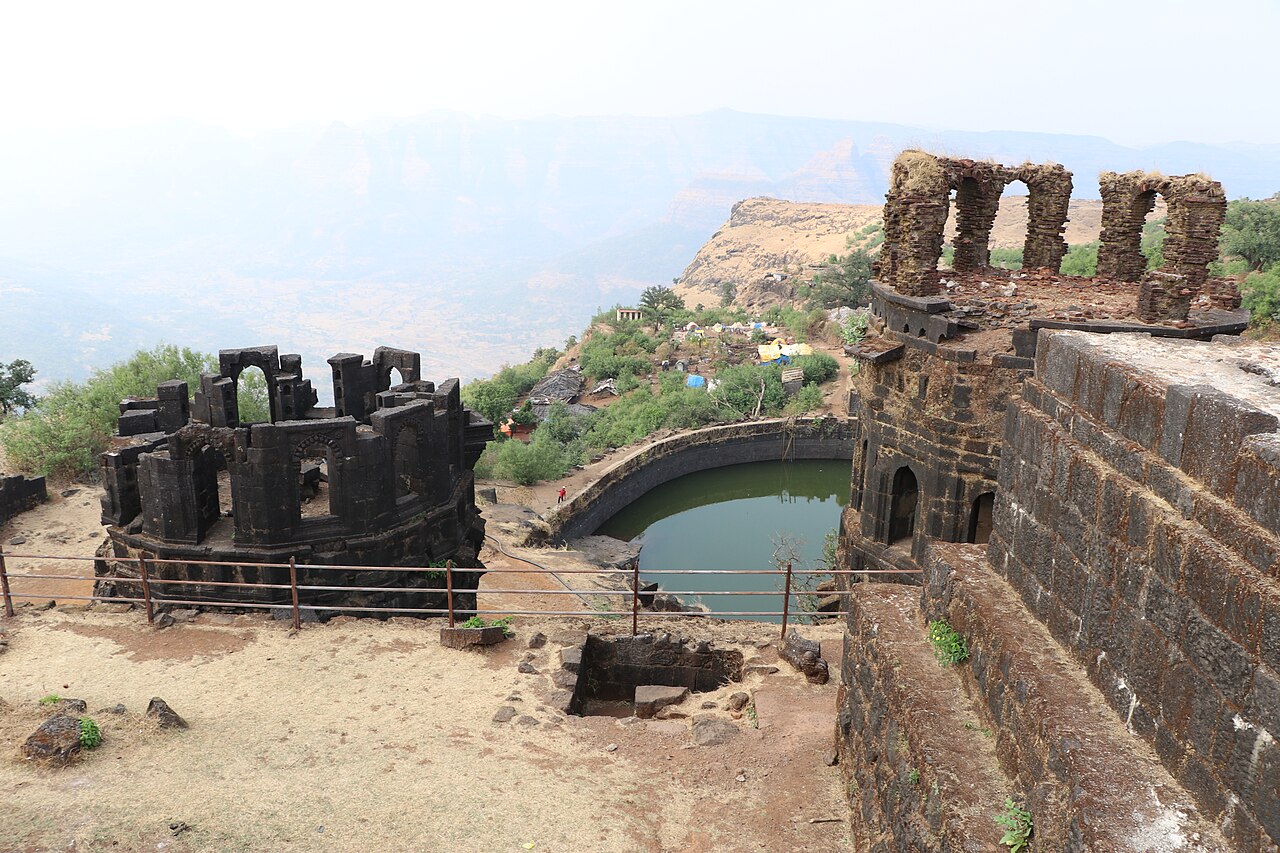
The property is a serial nomination of forts in Maharashtra and Tamil Nadu, spanning hill forts, hill-forest forts, hill-plateau forts, coastal forts and island forts. Together they represent the fortification system developed under Shivaji and extended by his successors.
History
Shivaji established Maratha power in the seventeenth century, using terrain and mobility against larger armies. Raigad became his capital and the site of his coronation in 1674. Coastal and island forts such as Sindhudurg and Vijaydurg supported a navy that was unusual among Indian powers of the period. The network continued in use under the Peshwas into the early nineteenth century.
Architecture
The defining characteristic is siting rather than a shared architectural style: each fort exploits the specific terrain it occupies, whether a basalt scarp of the Western Ghats, a forested ridge, a headland or a rock in the sea. Common features include concealed approaches, staged gateways set at angles to prevent a straight charge, cisterns and granaries for long sieges, and — at the sea forts — foundations laid directly onto tidal rock.
Significance
The Maratha forts show a military system built around geography and mobility rather than mass and permanence, and they include one of the few substantial naval fortification programmes mounted by an Indian power. India's forty-fourth property, inscribed in 2025.
UNESCO recognition
Inscribed in 2025 under criteria (iv) and (vi) as an outstanding example of a fortification system and for its association with Maratha history.
More views
3 images