
Moidams — the Mound-Burial System of the Ahom Dynasty
Charaideo, Assam
- Inscribed
- 2024
- Period
- 13th–19th century
- Property
- Cultural
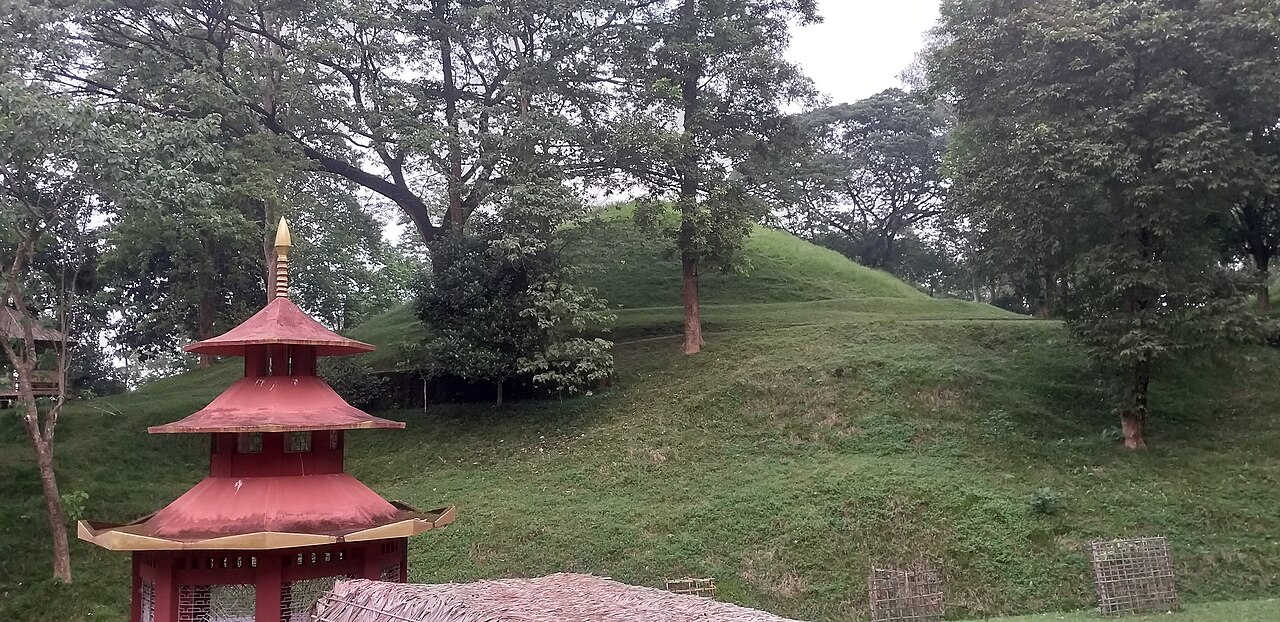
The moidams are the mound burials of the Ahom dynasty, concentrated at Charaideo, the dynasty's first capital. Each consists of a vaulted chamber beneath a hemispherical earth mound, enclosed within a boundary wall with an arched gateway.
History
The Ahoms established their rule in the Brahmaputra valley in 1228 under Sukapha and governed for close to six hundred years, until the Burmese invasions and the British annexation of the early nineteenth century. Charaideo remained the sacred burial ground throughout, even after the administrative capital moved. Many moidams were plundered in the nineteenth century.
Architecture
A moidam has a hollow vault of brick or stone beneath a mound of packed earth, topped in some cases by a small pavilion, and surrounded by an octagonal wall. Grave goods and, in earlier practice, retainers were interred with the ruler. The scale varies with the status of the person buried. The mounds sit within a designed landscape of hills, forest and water.
Significance
The moidams are the surviving physical record of a dynasty that governed the Brahmaputra valley for six centuries and repelled repeated Mughal advances. Their inscription in 2024 brought India's north-east onto the cultural World Heritage list for the first time.
UNESCO recognition
Inscribed in 2024 under criteria (iii) and (iv) as exceptional testimony to the Ahom funerary tradition and an outstanding example of its architecture.
More views
3 images