Mountain Railways of India
Darjeeling, the Nilgiris and Kalka–Shimla
- Inscribed
- 1999
- Period
- 1881–1908
- Property
- Cultural
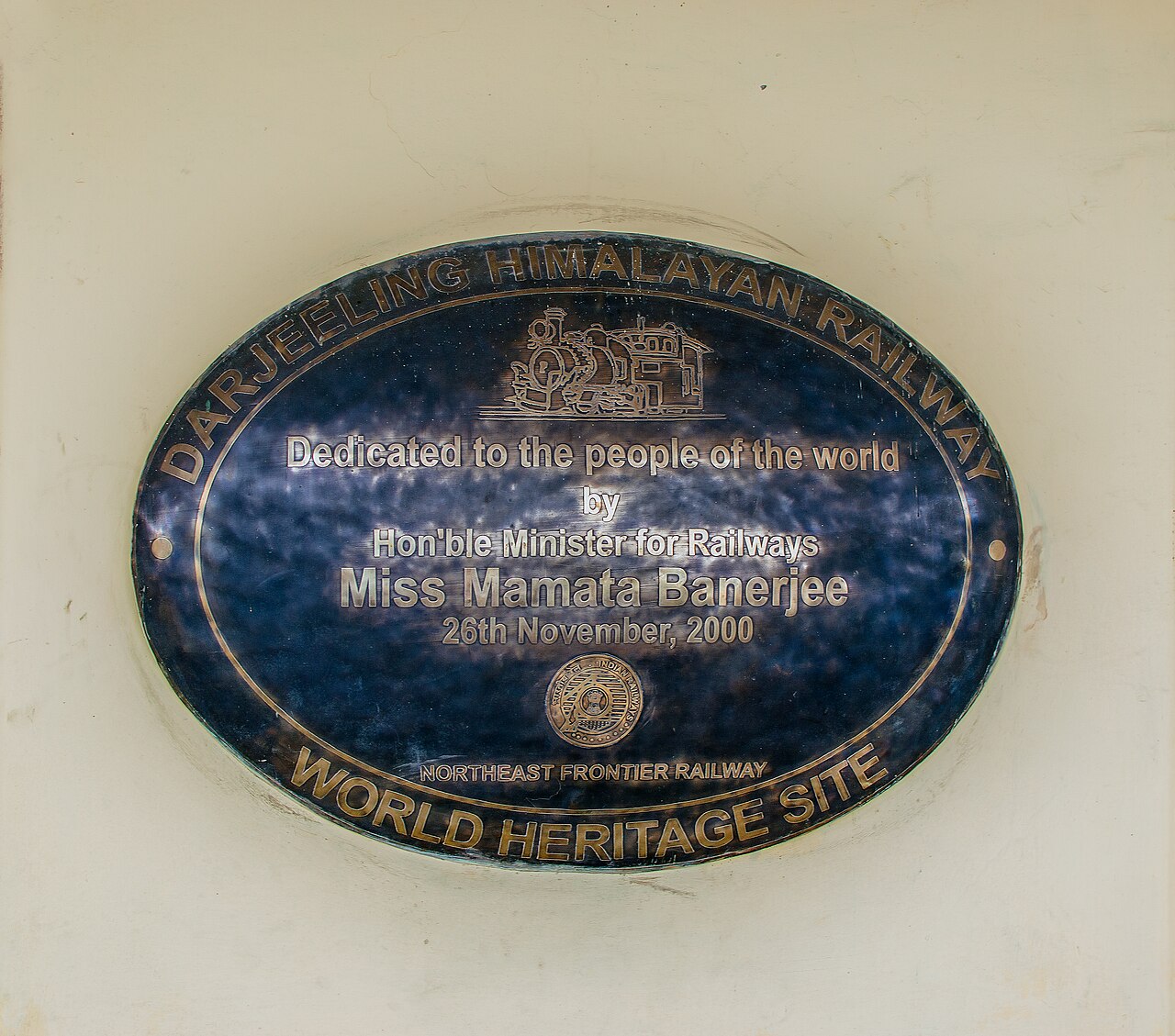
The property covers three separate railways: the Darjeeling Himalayan Railway in West Bengal, the Nilgiri Mountain Railway in Tamil Nadu, and the Kalka–Shimla Railway in Himachal Pradesh. All three are still in service.
History
The Darjeeling line opened in 1881 and was inscribed first, in 1999. The Nilgiri Mountain Railway, begun in 1899 and completed in 1908, was added in 2005, and the Kalka–Shimla Railway, opened in 1903, in 2008. All were built to connect hill stations to the plains under British administration, and all have remained in continuous operation since.
Architecture
Each line answers the gradient differently. Darjeeling uses loops and Z-reverses to gain height on a two-foot gauge, climbing to about 2,200 metres. The Nilgiri line is the steepest in Asia and uses an Abt rack-and-pinion system on its central section, with locomotives pushing rather than pulling. Kalka–Shimla runs on a two-foot-six-inch gauge through more than a hundred tunnels and over eight hundred bridges and viaducts.
Significance
These are engineering solutions to mountain terrain that were exported and copied, and they are unusual among World Heritage properties in being working infrastructure rather than preserved relics. Steam locomotives over a century old are still in scheduled service on the Darjeeling line.
UNESCO recognition
Inscribed in 1999, extended 2005 and 2008, under criteria (ii) and (iv) as an influential and outstanding example of railway engineering in difficult terrain.
More views
4 images