Nanda Devi and Valley of Flowers National Parks
Chamoli district, Uttarakhand
- Inscribed
- 1988
- Period
- Parks from 1982 and 1982
- Property
- Natural
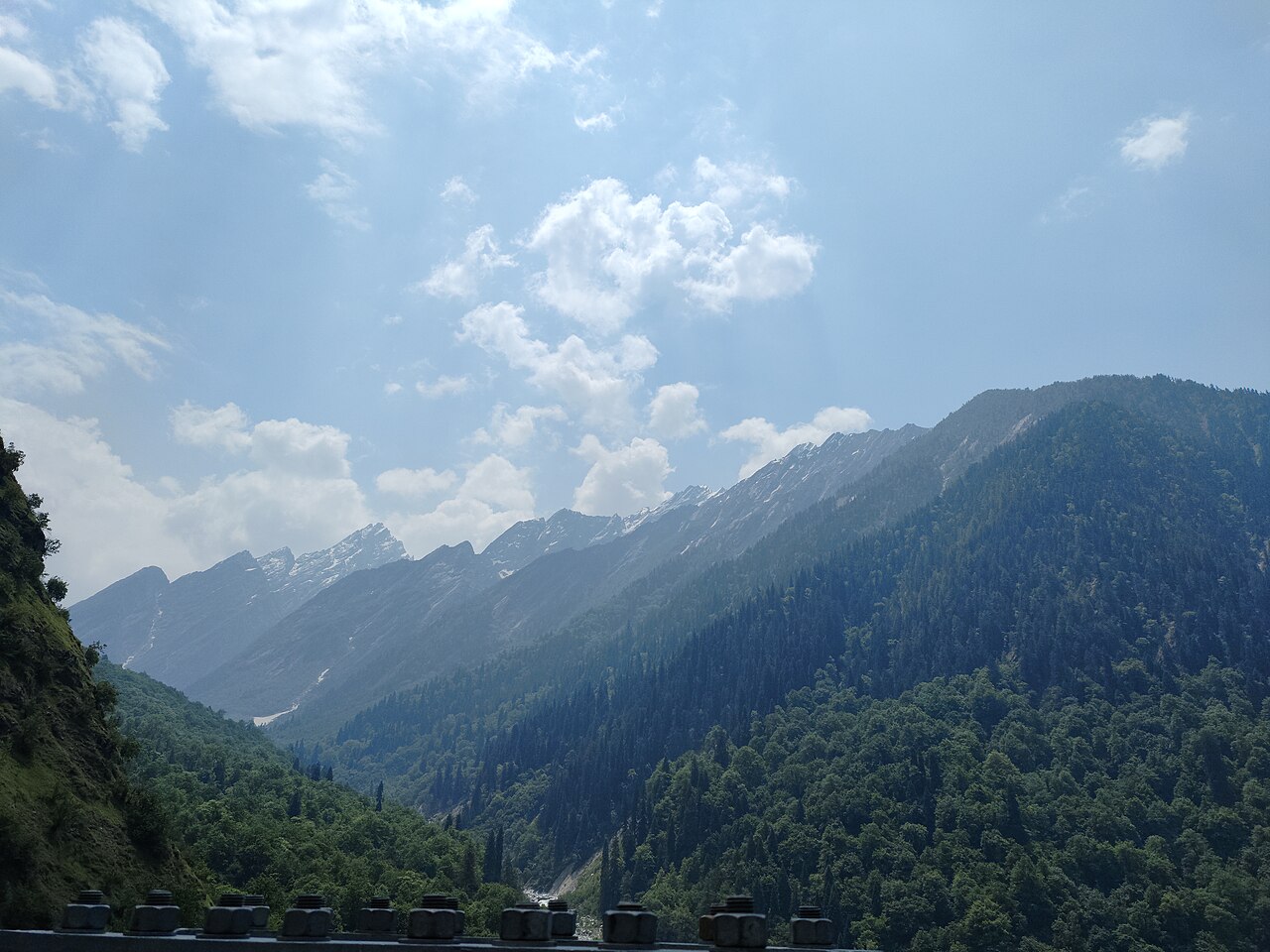
The property combines two adjacent parks in the Garhwal Himalaya: the Nanda Devi National Park, a glacial basin enclosed by a ring of high peaks around India's second-highest mountain, and the Valley of Flowers National Park, an alpine valley known for its seasonal flowering.
History
Nanda Devi's inner sanctuary was reached by climbers only in 1934. Heavy expedition traffic and grazing led to closure of the core zone in 1983, and the area has been largely off-limits since, which has allowed substantial recovery. Nanda Devi was inscribed in 1988 and the Valley of Flowers added as an extension in 2005.
Landscape and wildlife
The Nanda Devi basin is a near-enclosed glacial amphitheatre surrounded by peaks above 6,000 metres, holding high-altitude meadow, birch and rhododendron. The Valley of Flowers, at around 3,600 metres, carries several hundred flowering plant species that bloom in succession through the monsoon. Fauna includes snow leopard, Himalayan musk deer, Asiatic black bear, blue sheep and Himalayan monal.
Significance
The two parks together protect a full Himalayan altitudinal sequence and an unusually intact high-altitude ecosystem. Nanda Devi's closure is one of the few cases where access was withdrawn to let a site recover, and it worked.
UNESCO recognition
Inscribed in 1988, extended 2005, under criteria (vii) and (x) for exceptional natural beauty and biodiversity significance.
More views
4 images