Red Fort Complex
Delhi
- Inscribed
- 2007
- Period
- 1639–1648
- Property
- Cultural
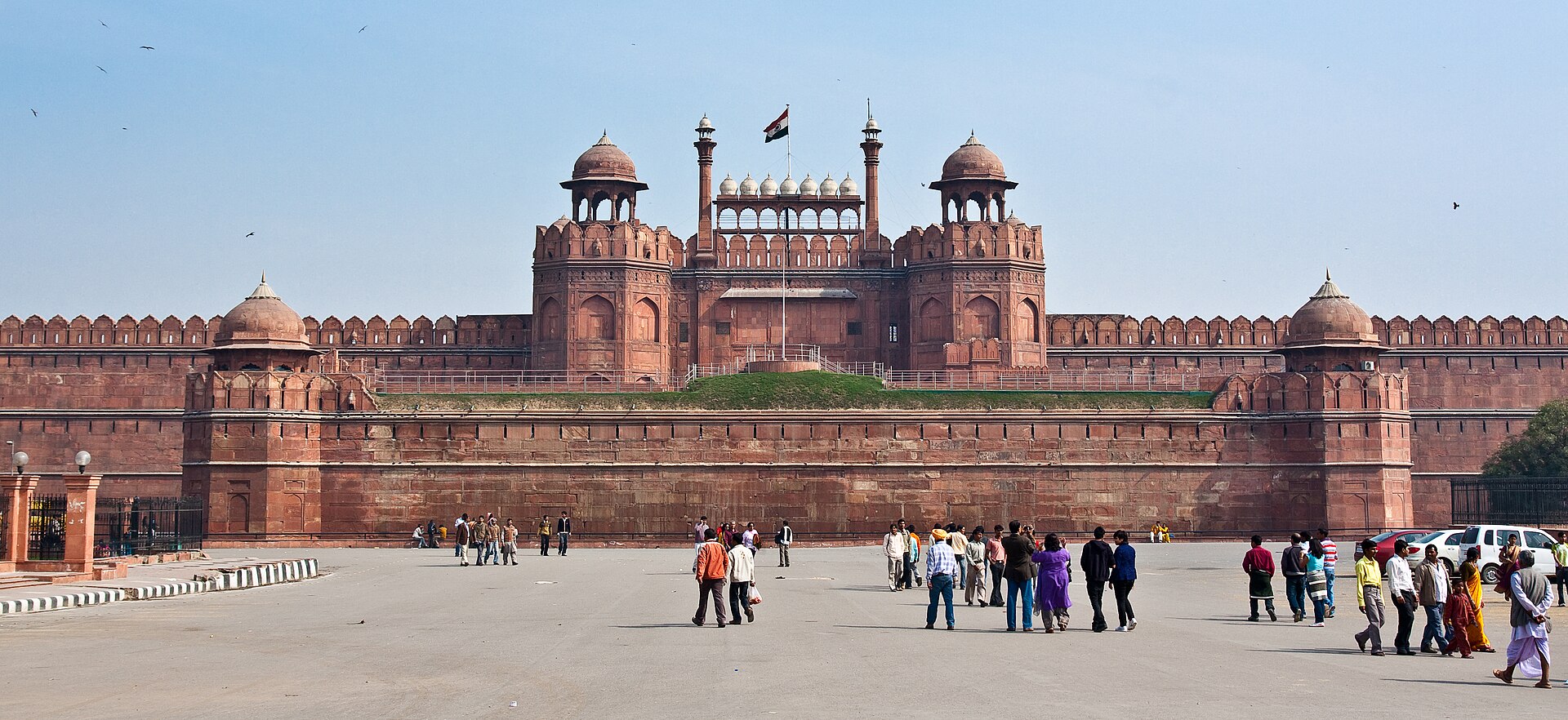
The Red Fort is a 17th-century fortress-palace that served as the main residence of the Mughal emperors for nearly 200 years. Built by Shah Jahan when he moved his capital from Agra to Delhi, it is a masterwork of Mughal architecture, combining Persian, Timurid, and Indian traditions.
History
Shah Jahan commissioned the Red Fort in 1638 when he decided to build a new capital, Shahjahanabad, on the banks of the Yamuna. Construction was completed in 1648. The fort served as the Mughal seat of power until 1857, when the British exiled the last emperor, Bahadur Shah Zafar, after the Indian Rebellion. The British converted parts of the palace into military offices and demolished several structures. The fort has been the site of the Prime Minister's Independence Day address since 1947.
Architecture
The fort is enclosed by massive red sandstone walls stretching 2.5 kilometres, rising up to 33 metres. The main entrance is the Lahore Gate. Inside, the Diwan-i-Am (Hall of Public Audience) and the Diwan-i-Khas (Hall of Private Audience) are connected by the Nahar-i-Bihisht (Stream of Paradise) water channel. The Moti Masjid (Pearl Mosque), the Rang Mahal (Palace of Colour), and the Hamam (royal baths) showcase the refined aesthetics of Shah Jahan's court.
Significance
The Red Fort is a symbol of Indian sovereignty and national pride. The annual Independence Day ceremony, where the Prime Minister hoists the national flag and addresses the nation from its ramparts, makes it one of the most politically significant monuments in India. The phrase 'if there is a paradise on earth, it is this, it is this, it is this' (from an inscription in the Diwan-i-Khas) encapsulates the Mughal vision of earthly splendour.
UNESCO recognition
Inscribed under Criteria (ii) and (vi) — for its outstanding testimony to Mughal architectural and cultural achievement, and its association with India's independence movement.
More views
5 images