



Vedic Period
- Period
- c. 1500–500 BCE
- Era
- 02 / 8
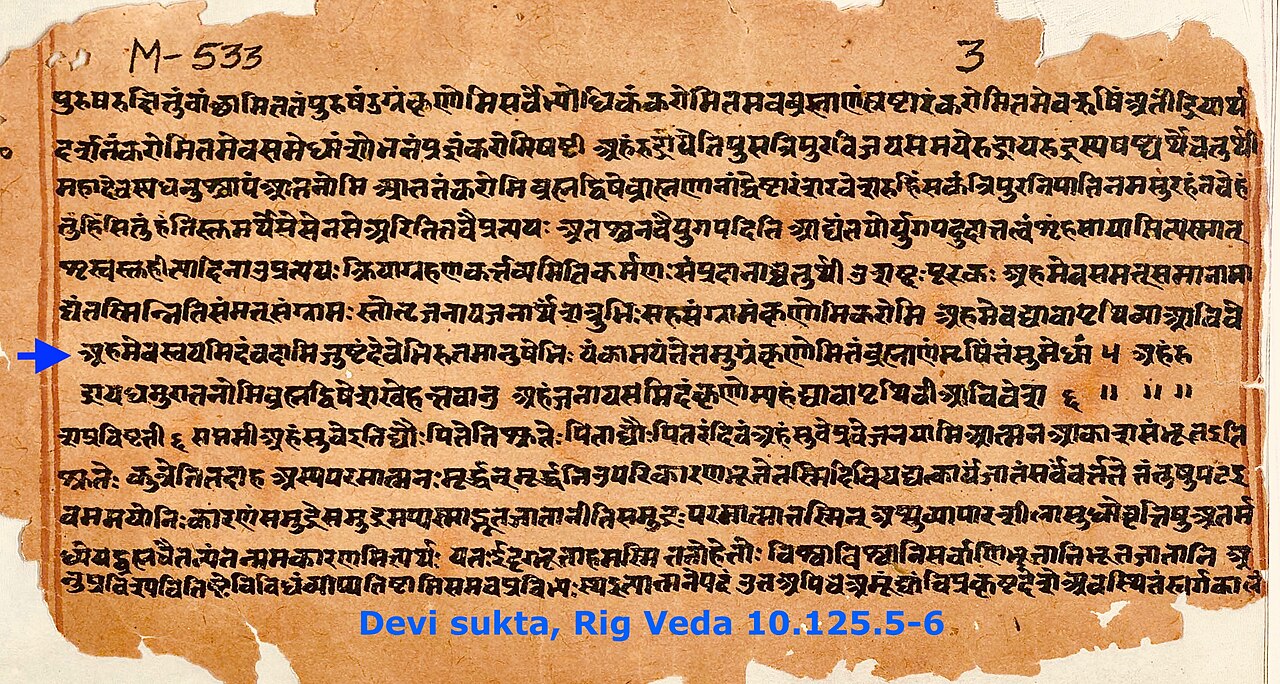
The Vedas composed and transmitted orally with a precision of recitation designed to survive without writing.
About
A period defined not by buildings but by a body of text, and by the method invented to carry it. The Vedas were composed in early Sanskrit and transmitted by memory for centuries before being written down, using recitation techniques built specifically to make error detectable and correction possible.
Context
The Rigveda is the oldest of the four collections, with the others — Yajurveda, Samaveda and Atharvaveda — following, and the Brahmanas, Aranyakas and Upanishads layered on afterwards. The material was composed and carried across the north-west and the Gangetic plain as settlement shifted eastward. This is a period with very little monumental archaeology attached to it, which is precisely what makes the transmission method the story.
What survives
The texts themselves, in a state of preservation that has few parallels anywhere. The mechanism is a set of layered recitation patterns — padapatha, which separates each word; kramapatha, which recites them in overlapping pairs; and more demanding forms including jatapatha and ghanapatha, which repeat words forwards and backwards in fixed sequences. Any substitution, omission or reordering breaks the pattern audibly, so the redundancy functions as error-correction. UNESCO inscribed the tradition of Vedic chanting on its list of Intangible Cultural Heritage in 2008, having proclaimed it in 2003.
Significance
The Vedic period is the origin of most of the philosophical and ritual vocabulary that later Indian thought works with. But the durable achievement is procedural: a culture facing the problem of preserving a long text without writing solved it by engineering redundancy into performance — and the solution still works.
Material from this period
3 images