Mauryan Empire
- Period
- 322–185 BCE
- Era
- 03 / 8
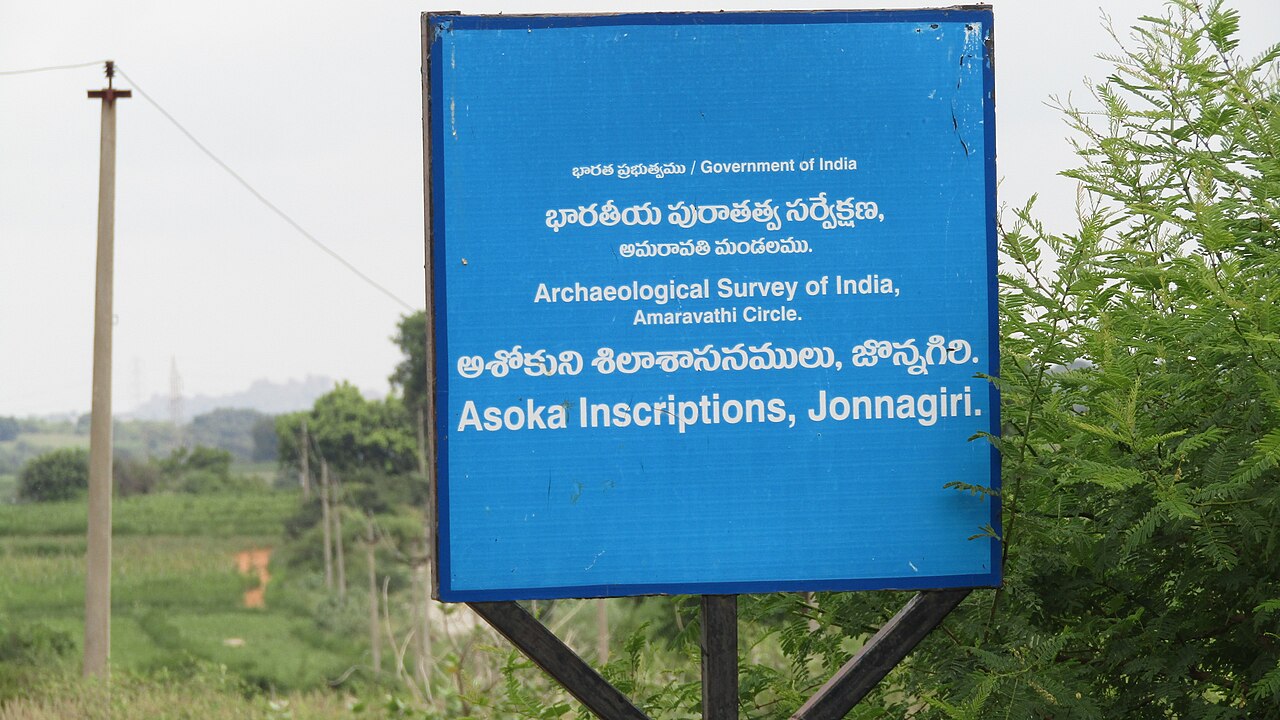
Ashoka's edicts cut into rock across the subcontinent — the earliest deciphered Indian writing, and the source of the national emblem.
About
The first empire to hold most of the subcontinent under one administration, and the first period from which Indian writing can actually be read. Ashoka had instructions and moral policy cut into rock faces and free-standing pillars from Afghanistan to Karnataka — a communications programme with no earlier parallel here.
Context
Chandragupta Maurya founded the dynasty around 322 BCE, and it reached its greatest extent under his grandson Ashoka, who ruled from roughly 268 to 232 BCE. After the conquest of Kalinga, Ashoka's edicts record a turn toward Buddhist principles and a policy expressed as dhamma. The empire declined after his death and ended in 185 BCE. The edicts themselves were unreadable for centuries until James Prinsep deciphered Brahmi in 1837, which reopened the period to history.
What survives
Rock edicts, pillar edicts and cave inscriptions across the subcontinent, written mainly in Prakrit in Brahmi and Kharosthi scripts, and — at Kandahar — in Greek and Aramaic. Polished sandstone pillars survive at several sites, along with the stupa at Sanchi, whose core is Mauryan, and the Barabar caves. The lion capital from the pillar at Sarnath, where the Buddha gave his first sermon, is in the Sarnath museum.
Significance
Everything datable and readable in Indian history starts here. The Mauryan period also supplies the modern republic with its emblems: the Sarnath lion capital was adopted as the State Emblem of India on 26 January 1950, and the wheel from its abacus sits at the centre of the national flag.
Material from this period
3 images