Mughal Empire
- Period
- 1526–1857
- Era
- 07 / 8
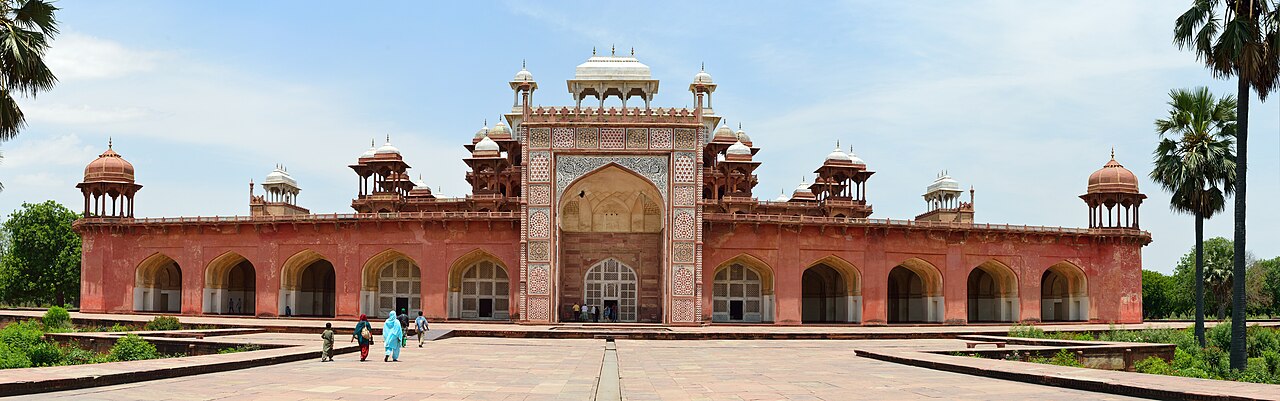
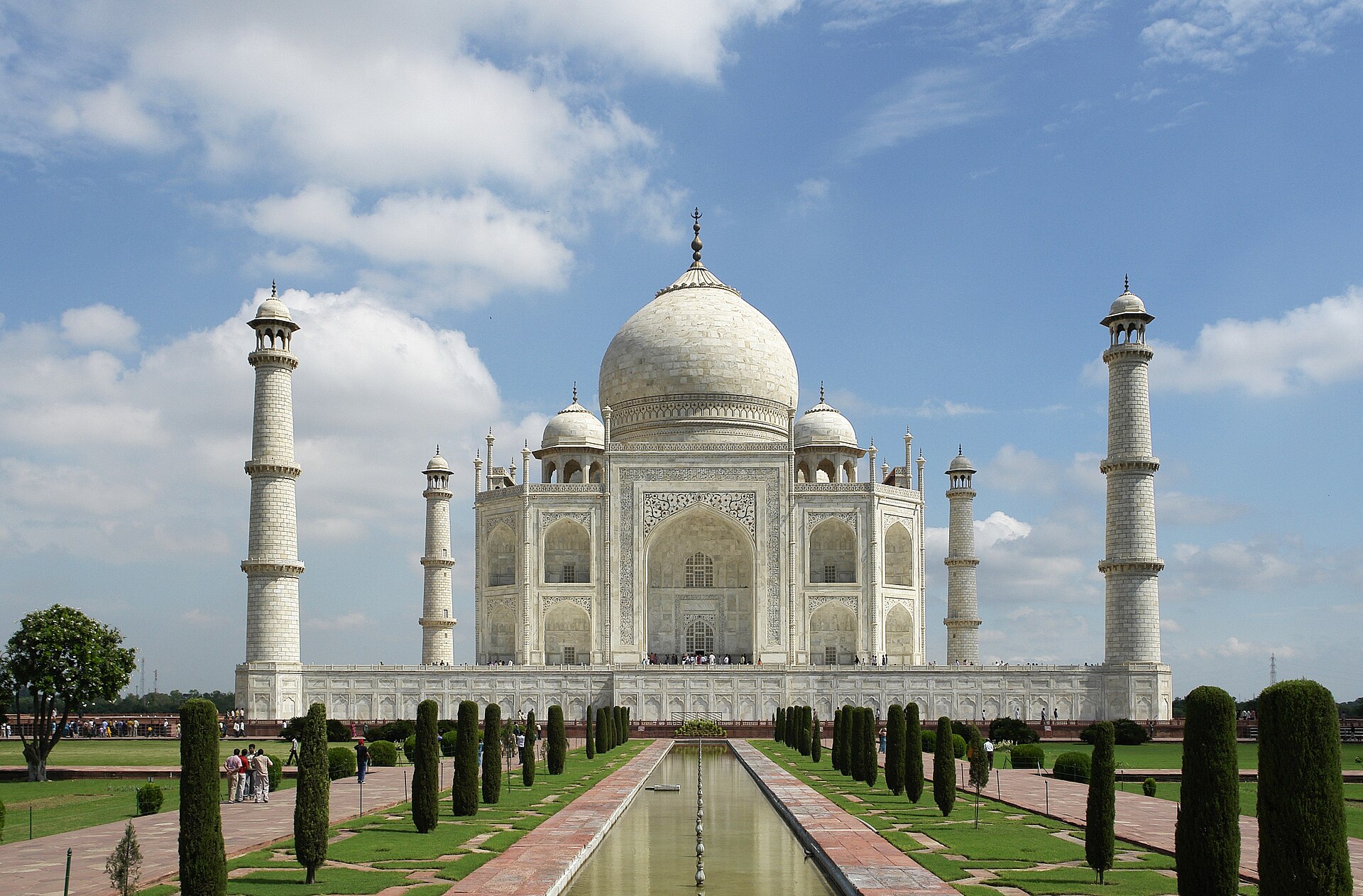
Charbagh gardens, pietra dura inlay, and a court style that produced the Taj Mahal and the Red Fort.
About
An empire that built at a scale and finish rarely matched, and left a court style — symmetrical, garden-set, inlaid in hard stone — that is now the most widely recognised image of Indian architecture anywhere in the world.
Context
Babur won at Panipat in 1526. Humayun's tomb, completed around 1570, established the charbagh — a garden quartered by water channels — as the setting for imperial tombs, and is the direct precedent for the Taj Mahal. Shah Jahan built the Taj Mahal at Agra between 1632 and 1653 and the Red Fort at Delhi between 1639 and 1648. Imperial power declined through the eighteenth century, and the empire was formally ended in 1857.
What survives
The Taj Mahal, the Red Fort, Humayun's tomb, Fatehpur Sikri, Agra Fort and the Lahore complexes, together with a very large body of painting and manuscript work. The characteristic technique is pietra dura — parchin kari — in which semi-precious stones are cut and set flush into white marble, still practised by workshops in Agra.
Significance
The Mughal period produced the buildings that most of the world pictures when it pictures India. It also demonstrates the composite character of that heritage: Persian and Central Asian form, Indian material and craft, executed by workshops whose descendants are still working.
Material from this period
3 images