Bharatanatyam
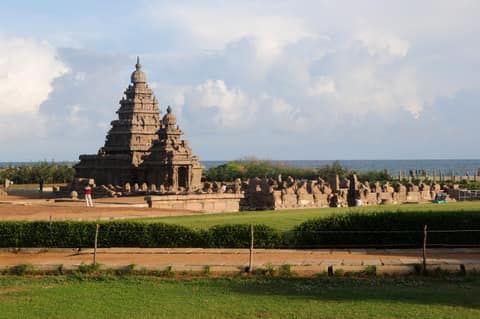
Temple and court practice; recast for the stage in the 1930s
- State
- Tamil Nadu
- Of eight
- 01 / 8
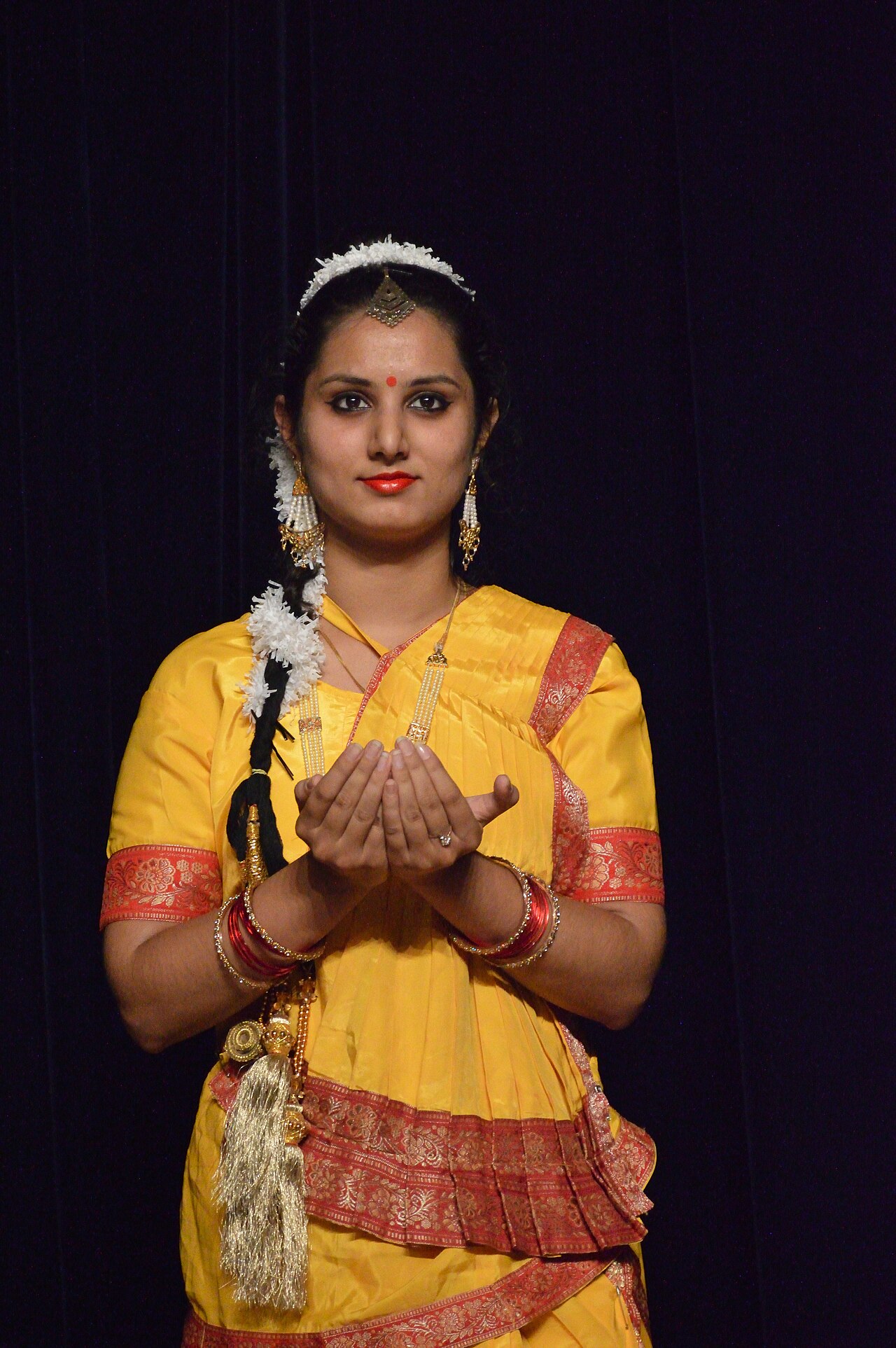
Temple dance of the Kaveri delta, rebuilt for the stage in the twentieth century. Geometry held in a half-seated stance.
About
A solo form built on straight lines and symmetry, danced almost entirely from a half-seated position with the knees turned out. Its material divides cleanly into nritta — pure rhythmic movement with no meaning attached — and abhinaya, where the hands, face and eyes carry a sung text. Almost every image people hold of Indian classical dance comes from this form.
History
Bharatanatyam descends from sadir, also called dasiattam, performed by devadasis in the temples and courts of the Tamil country. The late nineteenth and early twentieth-century anti-nautch campaign attacked the hereditary system that sustained it, and the Madras Devadasis (Prevention of Dedication) Act of 1947 ended the practice of temple dedication outright. In the same decades E. Krishna Iyer campaigned for the dance itself to be separated from the institution, and Rukmini Devi Arundale founded Kalakshetra in 1936, moving the form onto the proscenium stage under the name it now carries. What survives is therefore a reconstruction: continuous in vocabulary, broken in transmission.
Technique
The base position is araimandi, a half-seat with the knees opened to the sides and the spine held vertical. Movement is assembled from adavus, fixed units combining a footfall, an arm line and a hand shape. Meaning is carried by mudras — codified hand positions — read together with the eyes and eyebrows. The theoretical frame is the Natya Shastra, with the Abhinaya Darpana supplying much of the hand vocabulary in use.
Repertoire
A full recital follows the margam, an order that moves from pure rhythm toward interpretation and back: alarippu, jatiswaram, shabdam, varnam, padam, javali and tillana. The varnam sits at the centre and is the longest and most demanding item, alternating rhythmic passages with sustained interpretation of a single line of text.
Music and text
Carnatic music. The nattuvanar leads with cymbals, keeping the rhythmic syllables; a vocalist carries the text, with mridangam, violin or veena and flute. Sung texts are commonly in Tamil, Telugu or Sanskrit.
Significance
Bharatanatyam is the most widely taught Indian classical form in the world, and the clearest case of a tradition that survived by being institutionalised. That rescue is also a loss: the community that held the dance for centuries was dispossessed of it in the process, and the history of the devadasis is part of the form's record, not a footnote to it.
In performance
2 images