
Sattriya
15th–16th century; recognised as classical in 2000
- State
- Assam
- Of eight
- 08 / 8
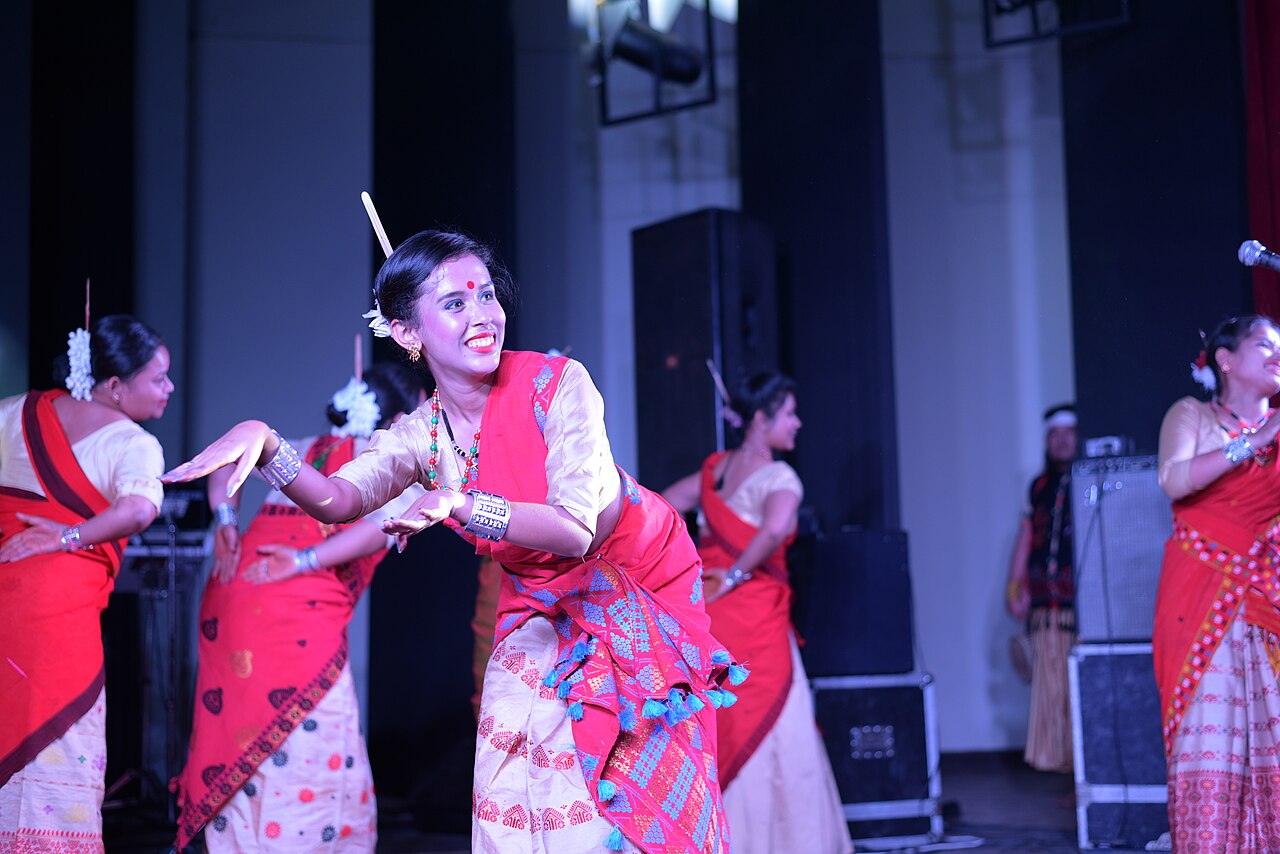
Born in the monasteries founded by Srimanta Sankardeva; recognised as classical only in 2000.
About
A monastic form, created as part of a religious reform movement and performed for four centuries inside the sattras of Assam by celibate monks. It is the most recently recognised of the eight, and the only one that entered the classical category from an unbroken institutional practice rather than a revival.
History
Srimanta Sankardeva (1449–1568) founded the Ekasarana Dharma, a Vaishnava movement in Assam that used performance directly as religious instruction. He wrote the Ankiya Nat, one-act plays staged as Bhaona, and the dance developed as part of that liturgy inside the sattras, the monasteries the movement established. It was maintained there continuously by bhokots, the resident monks. The Sangeet Natak Akademi recognised it as the eighth classical form in 2000, and it has since moved onto the concert stage and been taken up by women performers.
Technique
Movement is governed by fixed units of hand, foot and body positions set out in the tradition's own texts, with a strong rhythmic base supplied by the khol. Male and female styles — paurashik and stri — are distinguished in stance and energy. Masks are used for certain characters in Bhaona.
Repertoire
Ankiya Nat plays performed as Bhaona remain the core, alongside independent dance numbers such as Chali, Jhumura and Nadu Bhangi, and the ritual sequences that open a performance.
Music and text
Borgeet, the devotional song form composed by Sankardeva and Madhavdeva, carried by the khol drum and taal cymbals with flute. Texts are in Assamese and Brajavali, a literary language devised for the purpose.
Significance
Sattriya is proof that the classical list is a record of recognition, not a closed canon — the form was five centuries old when it was added. It also shows an unusual survival mechanism: not court patronage or twentieth-century revival, but a monastic institution that simply never stopped.
In performance
3 images