


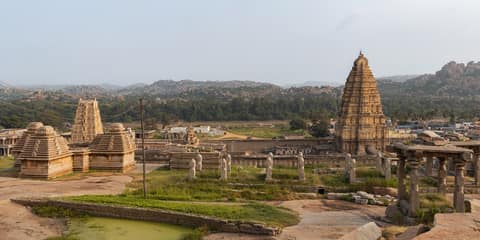

Kuchipudi
Named for the village of Kuchipudi; dance-drama tradition
- State
- Andhra Pradesh
- Of eight
- 04 / 8
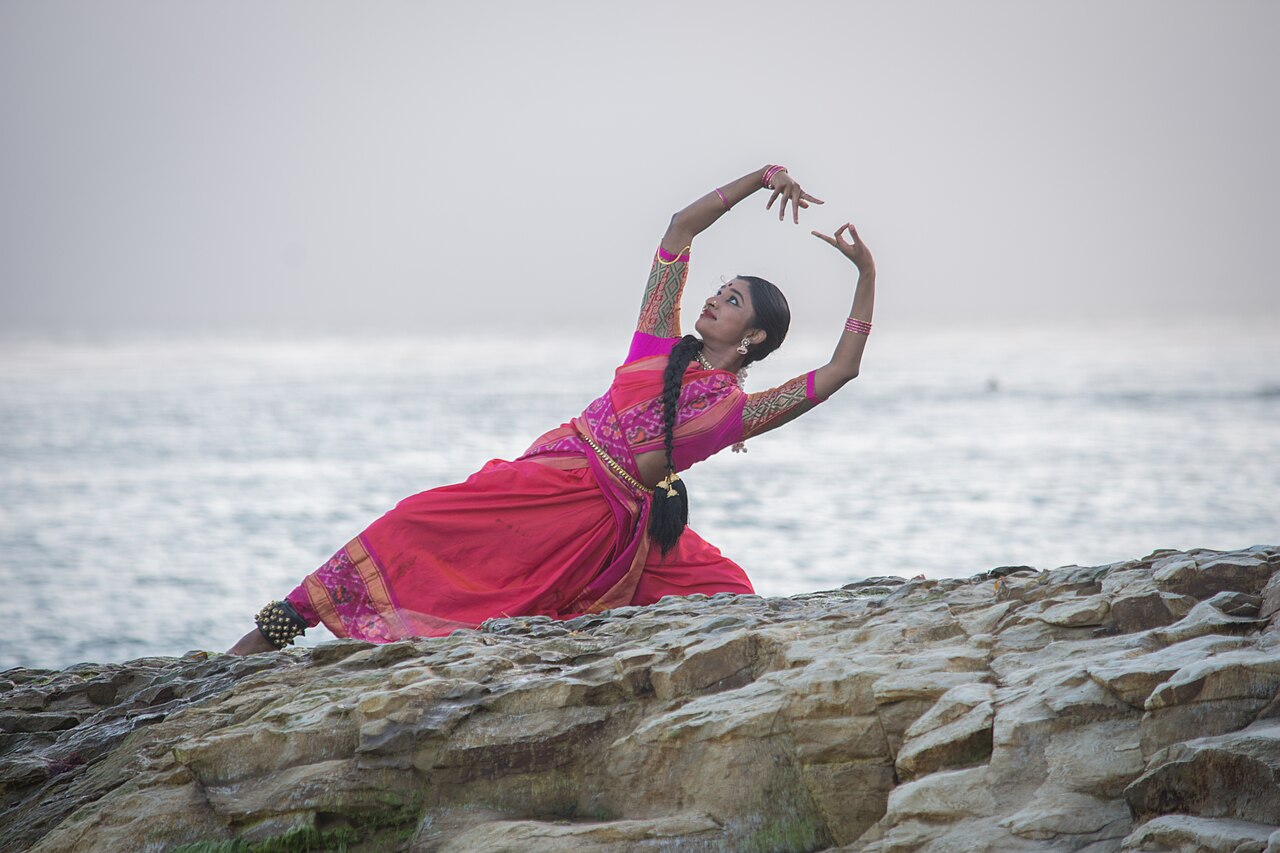
Village dance-drama tradition, distinguished by passages danced on the rim of a brass plate.
About
A form that keeps one foot in dance-drama and one in solo recital. Kuchipudi is quicker and more fluid than Bharatanatyam, mixes spoken and sung passages in its traditional plays, and is known for tarangam, in which the dancer performs standing on the rim of a brass plate.
History
The form is named after Kuchipudi, a village in the Krishna district of coastal Andhra Pradesh, where it was maintained by families of Brahmin performers. Tradition credits Siddhendra Yogi with composing Bhama Kalapam and establishing the practice of the village troupe. Performances were staged by all-male companies, with men taking the female roles. In the twentieth century Vempati Chinna Satyam was central in developing a solo repertoire and a codified syllabus that could be taught outside the village system, which is the form in which it now travels.
Technique
The stance is less deeply seated than Bharatanatyam and the movement carries more travel and rounder transitions. Traditional dance-drama includes spoken dialogue and sung passages delivered by the dancer, so the performer is expected to act and sing as well as dance. The tarangam requires balance on the raised rim of a brass plate, sometimes while balancing a pot of water on the head.
Repertoire
Bhama Kalapam, built around Satyabhama, remains the central dance-drama. Solo repertoire follows a sequence broadly comparable to the Bharatanatyam margam, with items such as jatiswaram, shabdam, tarangam and tillana.
Music and text
Carnatic music, with mridangam, violin, flute and vocal. Sung texts are commonly in Telugu, which gives the form much of its particular rhythm and diction.
Significance
Kuchipudi preserves the dance-drama as a living format rather than a historical one, and shows how a form held by a single village community was rebuilt into a syllabus taught worldwide — with the same gains and losses that transition brought elsewhere.
In performance
3 images